

Week commencing October 19th 2026
TradeDay Macro Matters
Macroeconomic / Geopolitical developments
- Stock averages sell off, driven by Semiconductor and AI sectors
- US inflation data (CPI and PPI) hotter than expected
- Raised Middle Eastern tensions keep oil prices elevated
- US Treasury yields retreat from recent highs
- Earnings recap, plus focus this week on further earnings and flash PMI data
- What's Ahead
Stock averages sell off, driven by Semiconductor and AI sectors
US stock markets ended the week lower as a sharp sell off in semiconductor and artificial intelligence (AI) related shares weighed on the major indices. The Nasdaq Composite fell 4.48%, the S&P 500 declined 1.95%, while the Dow Jones Industrial Average bucked the trend to gain 0.67%, marking its second consecutive weekly advance.
Technology was the worst performing sector, falling 6.49%, while industrials lost 1.9%. Investors grew more cautious about the scale of spending on AI infrastructure, the debt required to finance it and whether future revenues will justify current valuations. The shift in sentiment favoured more defensive areas, with consumer defensives gaining 5.06% and energy rising 4.58%, while value stocks outperformed growth stocks.
US inflation data (CPI and PPI) hotter than expected
US inflation remained stubbornly high in September, with the Consumer Price Index (CPI) rising 3.7% year on year, up from 3.4% in August and above forecasts of 3.6%. Prices increased 0.6% month on month, while core CPI, which excludes food and energy, rose 2.6% annually and 0.3% monthly. Higher energy costs were a significant contributor, with gasoline prices jumping 9.1%, although increases in shelter, used vehicles and apparel showed that price pressures extended beyond fuel.
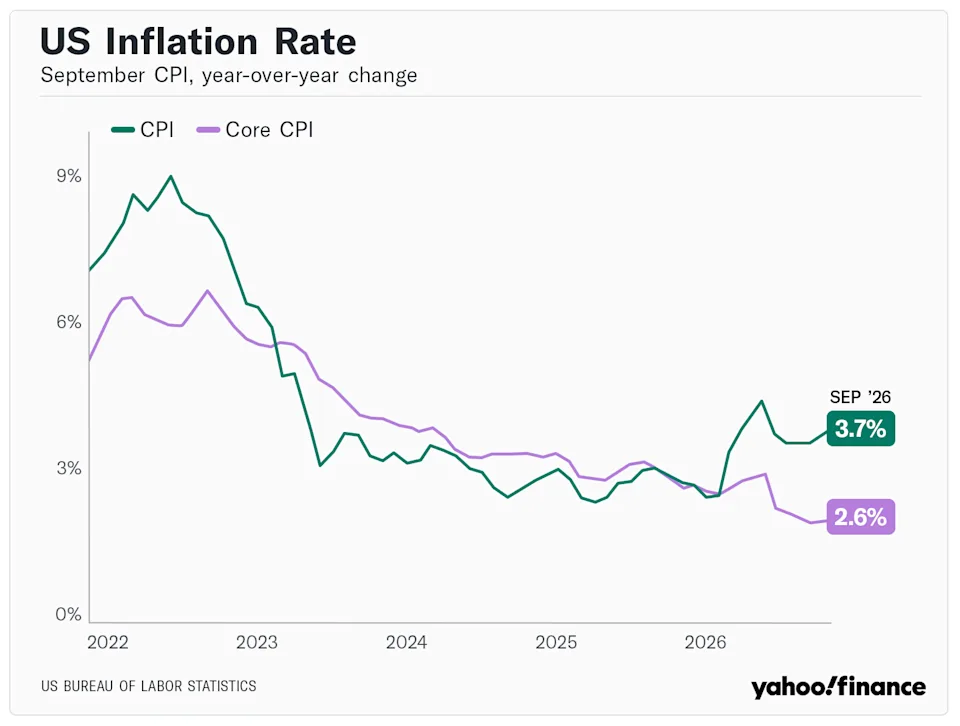
The Producer Price Index (PPI) added to concerns, rising 1.3% month on month and 6.3% annually, substantially exceeding expectations and marking the largest annual increase since 2022. Energy costs played a major role, but higher prices were also filtering through other parts of the supply chain. The stronger than expected readings reinforced uncertainty over the Federal Reserve’s next move, with investors assessing whether persistent inflation could require further interest rate increases.
Raised Middle Eastern tensions keep oil prices elevated
Oil prices surged as the conflict involving Iran intensified, with attacks on commercial vessels around the Strait of Hormuz raising fresh concerns about the security of a key global shipping route. Brent crude briefly reached $110 a barrel, its highest level since May, while US benchmark West Texas Intermediate (WTI) rose 11.01% over the week to $101.75 per barrel.

Supply concerns were compounded by attacks targeting Saudi Arabia and disruption caused by Hurricane Isaias along the US Gulf Coast. US commercial crude inventories fell by more than eight million barrels as production was temporarily curtailed. Although some Middle Eastern oil exports had recovered from earlier disruption, continued security risks and the need for countries to replenish depleted reserves helped keep prices elevated, increasing the risk of further inflationary pressure for businesses and consumers.
US Treasury yields retreat from recent highs
US Treasury yields moved lower over the week despite the hotter than expected inflation reports. The benchmark 10 year Treasury yield fell to 5.09% from 5.24%, while the two year yield declined to 4.74% from 4.80%, easing back from levels last seen around multi decade highs.
The retreat reflected a shift towards safer assets as investors reduced exposure to technology shares and reassessed the risks surrounding heavily financed AI investment. The move into government bonds helped offset some of the upward pressure that stronger inflation could otherwise have placed on yields. However, borrowing costs remain elevated, leaving markets sensitive to incoming economic data and the possibility of further Federal Reserve tightening.
Earnings recap, plus focus this week on further earnings and flash PMI data
The third quarter earnings season began in earnest with results from major US banks, including JPMorgan Chase, Goldman Sachs, Wells Fargo and Citigroup, followed by Bank of America and Morgan Stanley. Results were mixed, with some banks reporting strong profits and trading revenues, but all six major bank stocks fell following their reports as investors remained concerned about inflation, rising interest rates and the economic outlook. Taiwan Semiconductor Manufacturing Company (TSMC) also reported a record quarterly profit, up nearly 69% year on year, while revenue increased 51%, highlighting continued demand for AI chips despite the broader sell off in semiconductor shares.
Attention now turns to a busy week of corporate results, with Meta Platforms and Tesla among the most closely watched companies as investors look for evidence that substantial AI investment is translating into sustainable growth and returns. Results from chipmaking equipment supplier Lam Research, Texas Instruments, Netflix, IBM and major airlines will provide further insight into technology spending, consumer demand and business conditions.

On the economic front, preliminary October US Flash Manufacturing and Services PMI figures are due on Friday, alongside weekly Jobless Claims on Thursday and revised University of Michigan Consumer Sentiment. The surveys will provide an early indication of economic momentum and price pressures heading into the final part of the year. With the Federal Reserve in its pre meeting blackout period ahead of its October 27 to 28 meeting, corporate earnings and incoming data are likely to play a particularly important role in shaping market expectations.
What's Ahead
Central Bank Watch: The main central bank activity this week is the People’s Bank of China Interest Rate Decision on Tuesday.
Macro Data Watch: The main macro data release this week is Global Flash PMI data on Friday. Some other releases of note are Chinese GDP on Monday, UK Employment reports on Tuesday and UK CPI on Wednesday.
Earnings Watch: The Q3 US earning season continues this week with Meta and Tesla (two of the Magnificent Seven) releasing their earnings on Wednesday.
Date
Major Macro Data
10/19/2026
Chinese GDP, Industrial Production and Retail Sales; Canadian CPI
10/20/2026
PBoC Interest Rate Decision; German PPI; UK Employment Reports; US Building Permits, Housing Starts and Pending Home Sales
10/21/2026
Japanese Trade Report; UK CPI, PPI and RPI; German Buba Monthly Report
10/22/2026
US Initial Jobless Claims; EU Consumer Confidence
10/23/2026
UK Consumer Confidence and Retail Sales; Japanese CPI; Global Flash PMI; Canadian Retail Sales; US Consumer Inflation Expectation and Michigan Consumer Sentiment
Date
Major Earnings Data
10/19/2026
BHP Group Ltd
10/20/2026
SpaceX; GE Aerospace; Netflix; Rtx Group; ABB ADR; ABB; Intuitive Surgical; Chubb; Capital One Financial; 3M; United Airlines Holdings
10/21/2026
Meta Platforms; Tesla; Lam Research; Philip Morris; SAP ADR; Thermo Fisher Scientific; Texas Instruments; IBM; Abbott; NextEra Energy; Danaher; AT&T; Iberdrola SA ADR
10/22/2026
P&G; Roche Holding ADR; Nestle ADR; L’Oreal ADR; Union Pacific; Hermes International SA ADR; Blackstone; Spotify Tech; Barclays ADR
10/23/2026
Exxonmobil Holding; American Express; Safran SA ADR
