

Week commencing November 9th 2026
TradeDay Macro Matters
Macroeconomic / Geopolitical developments
- US stocks and yields lower, with AI and chip stocks choppy
- Blue sweep in midterms triggers market volatility
- Employment and Manufacturing PMI data remain solid
- Big tech earnings flag caution
- US CPI data in focus this week
- What's Ahead
US stocks and yields lower, with AI and chip stocks choppy
US stock markets ended a volatile week lower, with technology shares bearing the brunt of a sharp sell-off towards the end of the week. The Nasdaq Composite fell 3.37%, the S&P 500 declined 2.68% and the Dow Jones Industrial Average lost approximately 0.94%. The Nasdaq entered correction territory after Thursday's steep decline, while the Philadelphia Semiconductor Index suffered particularly heavy losses as investors reassessed the outlook for AI-related companies.
US Treasury yields also moved lower, with the 10-year yield falling from approximately 4.94% to 4.86%, marking its fifth consecutive weekly decline. The two-year yield dropped from around 4.56% to 4.52%, reflecting demand for government bonds amid heightened uncertainty. Elsewhere, oil prices fell sharply, with West Texas Intermediate crude declining approximately 12% to $90.52 a barrel, while gold gained 4.88% to $4,065.90.
Blue sweep in midterms triggers market volatility
The US midterm elections produced a decisive victory for the Democrats, who gained control of both the House of Representatives and the Senate, marking a significant shift in Washington's political balance. Markets initially welcomed the result, with investors seeing the prospect of a more divided government as a potential constraint on President Trump's fiscal and policy agenda. However, the initial optimism quickly faded as attention turned to the potential consequences for corporate regulation, particularly the artificial intelligence industry.

The prospect of tighter restrictions on data centre development became a particular concern for investors, following Democratic gains in several key states and local votes opposing new facilities. Data centres require significant amounts of electricity, water and land, with local authorities playing an important role in approving their construction. This raised concerns that increased political and regulatory scrutiny could delay AI infrastructure projects and affect the returns expected from substantial technology investments. The result was a turbulent week for markets, with the VIX volatility index rising 32% to 25.6, despite a partial recovery in equities on Friday.
Employment and Manufacturing PMI data remain solid
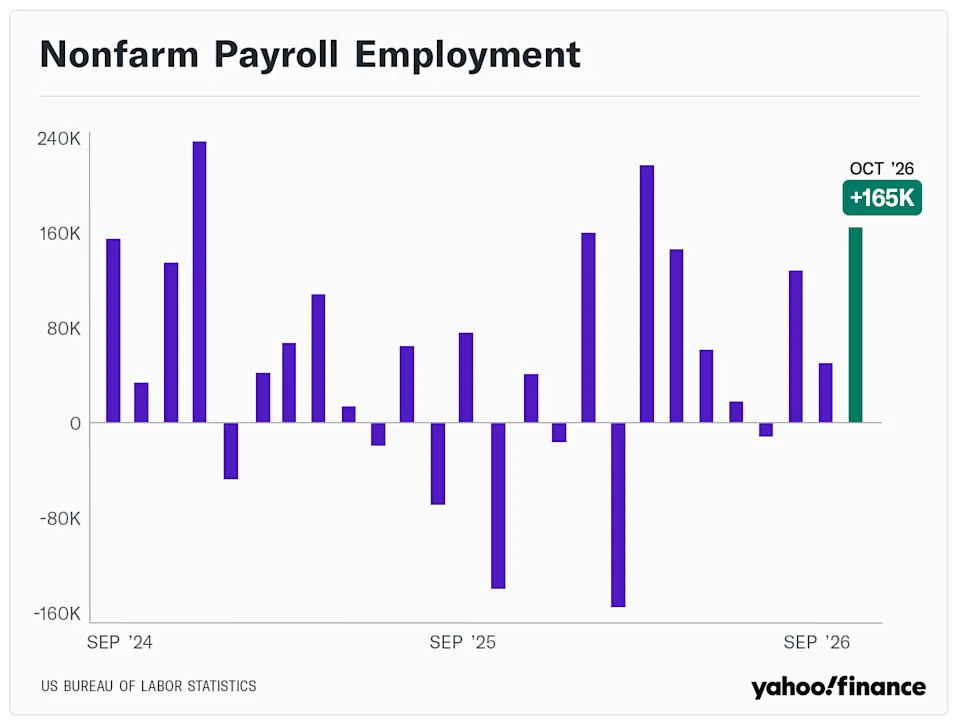
US Employment data provided a significant positive surprise, with the economy adding 165,000 jobs in October, comfortably exceeding expectations of approximately 60,000. The unemployment rate also edged lower from 4.2% to 4.1%, while employment figures for August and September were revised upwards by a combined 84,000. Wage growth added to the strength of the report, with average hourly earnings increasing 0.4% month on month, above the 0.3% forecast. The figures suggest that the labour market remains resilient, reducing the likelihood of the Federal Reserve rushing to cut interest rates, with markets increasing the probability of a December rate hike.
Manufacturing activity also strengthened, with the ISM Manufacturing PMI rising to 55.5 in October from 54.5 in September, marking its tenth consecutive month of expansion. Production and new orders improved, while the prices index eased to 75.2 from 77.9, although it remained elevated. The services sector continued to expand as well, with its PMI recording 54.5, slightly lower than September's 54.9 but remaining above the 50-point threshold for a 28th consecutive month. Overall, the figures point towards continued economic growth, although persistent price pressures remain a concern for policymakers.
Big tech earnings flag caution
Third-quarter earnings have generally been encouraging, but results from some of the largest technology companies have highlighted growing concerns about the scale of investment in artificial intelligence. The Magnificent Seven are now expected to deliver earnings growth of 22.6%, compared with 32.6% for the remaining companies in the S&P 500, marking a notable shift in expectations. Although broader corporate earnings remain relatively strong, investors are becoming increasingly selective, looking for evidence that substantial AI spending is translating into sustainable revenue and profits.

Individual company results have also produced mixed reactions. Apple reported record quarterly revenue of $114.5 billion, beating earnings expectations, although its outlook for lower profit margins raised concerns about rising memory chip costs. Alphabet delivered particularly strong growth in its cloud division, while Meta continued to benefit from strong advertising revenue but faces substantial capital expenditure requirements. AMD also reported better-than-expected results and provided an encouraging sales outlook, helping to contrast with the weaker outlook previously delivered by Intel. Overall, AI remains a major growth opportunity, but investors are increasingly questioning how quickly companies can generate meaningful returns from their significant investments.
US CPI data in focus this week
Investors will turn their attention to US inflation data this week, with the October Consumer Price Index (CPI) due on Tuesday. Headline CPI is expected to increase by 0.3% month on month, slowing from September's 0.6% rise, while core CPI is forecast to ease from 0.3% to 0.2%. There is an unusual complication with this release, as the previous year's government shutdown means the Bureau of Labor Statistics will not publish year-on-year figures for October. Consequently, investors will pay particularly close attention to the monthly readings and the underlying components, especially services and shelter costs, to assess whether inflationary pressures are beginning to moderate.
The Producer Price Index (PPI), which measures changes in prices received by businesses, is due on Friday. Headline producer prices are forecast to rise by 0.4%, down from September's 1.3% increase, while core PPI is expected to increase by 0.3%, compared with 0.7% previously. Together, the reports should provide a clearer picture of inflation across the economy and could influence expectations for the Federal Reserve's December meeting. Following the stronger-than-expected employment report, markets are already pricing in a greater possibility of another interest rate increase, making any further evidence of persistent inflation particularly important.
What's Ahead
Central Bank Watch: It is a relatively quiet week on the central bank front, with no major rate decisions scheduled. Instead, investor focus will be on speeches from officials at the Federal Reserve, European Central Bank and Bank of England.
Macro Data Watch: The main macro data releases this week are the US CPI on Tuesday and US PPI on Friday. Some other releases of note are Chinese CPI on Monday, German HICP on Wednesday, UK and EU GDP on Thursday and Friday respectively.
Date
Major Macro Data
11/09/2026
Chinese CPI and PPI; EU Sentix Investor Confidence
11/10/2026
UK Retail Sales; Chinese Trade Reports; US CPI
11/11/2026
German HICP
11/12/2026
UK GDP, Industrial Production and Manufacturing Production; US Initial Jobless Claims and Existing Home Sales Change
11/13/2026
EU Employment Change and GDP; US PPI
