
Week commencing July 8th 2024
TradeDay Macro Matters
Macroeconomic / Geopolitical developments
- Markets up to record highs in holiday shortened week
- US PMI data misses, European data mostly beats
- FOMC Minutes show Fed not ready to cut rates
- US Jobs data slows, yields lower, stocks nudge up
- Labour win landslide victory in U.K. election
- What's Ahead
Markets up to record highs in holiday shortened week
In a week shortened by the Independence Day holiday, the S&P 500 Index continued its climb to record highs, driven by gains in growth shares, up 2.0% on the week. The technology-heavy Nasdaq Composite also reached new heights, ending the week up 3.5% and marking a significant rebound from its lows since mid-2022. Meanwhile, the Dow Jones Industrial Average saw more modest gains of 0.7%. Trading volumes were lighter due to the holiday, with markets closing early on Wednesday and remaining closed all day Thursday. Expectations for lower interest rates, spurred by signs of weakening growth and easing inflation pressures, favored growth stocks, which outperformed value stocks.
The rally was also fueled by a positive June employment report, which, while solid enough to support ongoing economic expansion, also signaled potential slowing in the pace of growth. This moderation helped bond yields fall, with the 10-year Treasury yield declining to 4.27% from nearly 4.5% at the start of July. The employment report's unexpected increase in the unemployment rate to 4.1%, alongside revisions lowering April and May payrolls, shifted market expectations for a September rate cut to 77.6% from 64.1% a week ago, providing further optimism for equity markets.
US PMI data misses, European data mostly beats
The US ISM Services Purchasing Managers Index (PMI) sharply contracted to 48.8 in June, its lowest level since June 2020, significantly dropping from May's 53.8 and falling short of the forecasted 52.5. This unexpected contraction in the services sector, coupled with a third consecutive month of contraction in the ISM Manufacturing PMI to 48.5, has raised concerns about the economic outlook and June-quarter GDP forecasts. In contrast, the S&P’s June Services PMI remained positive, rising to 55.3 from 54.8, indicating growth with expanding new orders and workforce numbers. These mixed reports present conflicting views on the US economy, but the sharp slowdown in ISM’s data could bolster the case for the Federal Reserve to cut rates more than once in 2024.
In Europe, the PMI data paints a more resilient picture. The final HCOB Eurozone Services PMI business activity index was revised up to 52.8 from the initial 52.6 flash reading, continuing to show growth despite being slightly down from May’s 53.2. However, the struggling manufacturing sector saw the HCOB Eurozone Manufacturing PMI output index fall to 46.1 from 49.3, indicating contraction. This led to the HCOB Eurozone Composite PMI output index dropping to 50.9 from May’s 52.2, still above the neutral 50.0 level but signaling a slowdown. Despite the mixed performance, the overall European data showed a more stable economic environment compared to the US, where significant PMI contractions are likely to impact GDP forecasts and influence monetary policy decisions.
FOMC Minutes show Fed not ready to cut rates
The Federal Reserve's June meeting minutes, released on Wednesday, revealed that while inflation is trending downward, it is not declining swiftly enough to justify a reduction in interest rates. Federal Reserve officials emphasized the necessity for additional favorable data to bolster their confidence that inflation is moving sustainably toward the 2% target. The summary of the meeting indicated that, despite some disagreement among the 19 central bankers, the Federal Open Market Committee (FOMC) decided to maintain the current interest rates. This cautious stance highlights the Fed's focus on achieving more consistent evidence of cooling inflation before making any rate cuts.
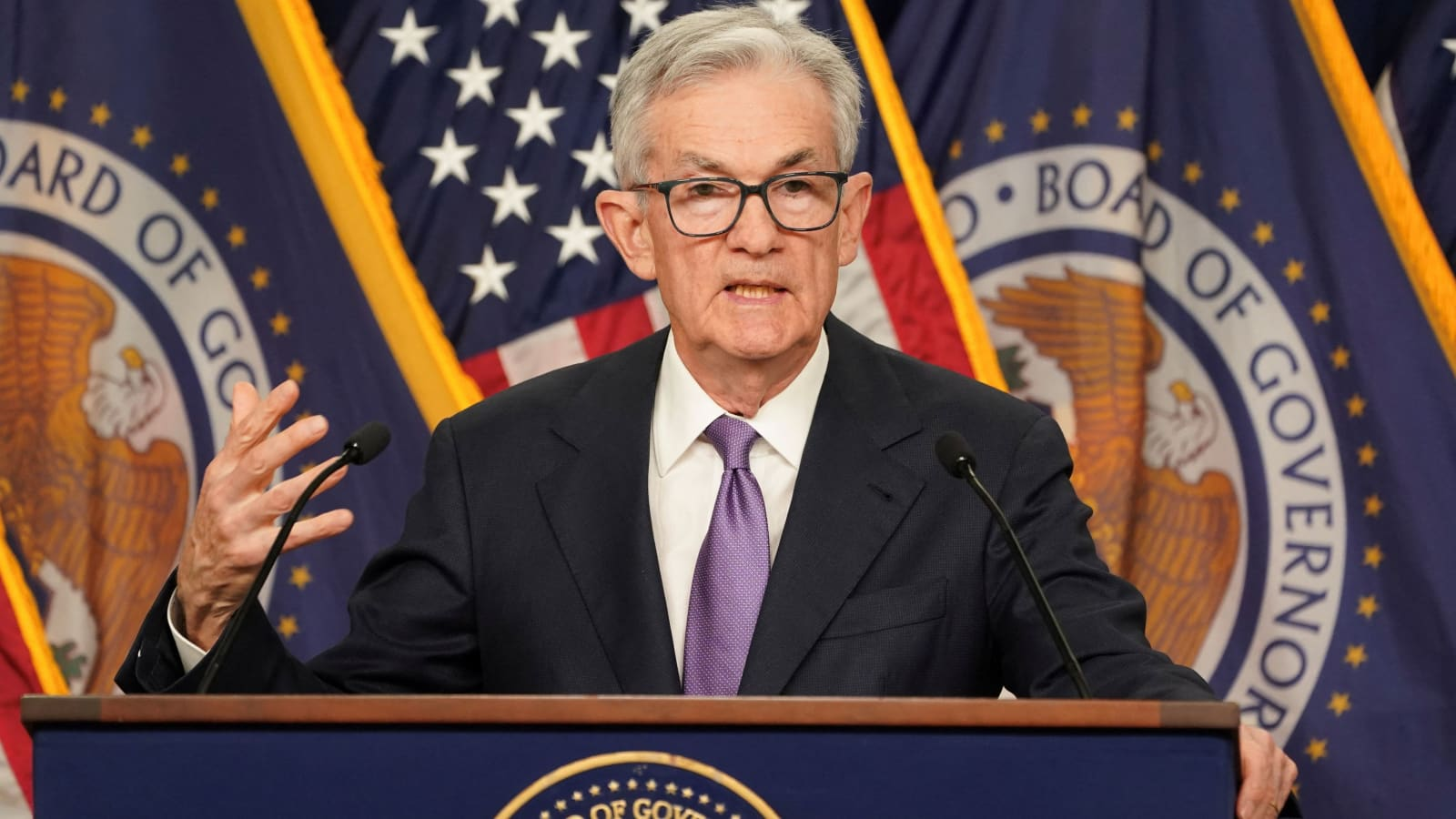
The minutes reflected some internal disagreements, with some members advocating for tightening policy if inflation persists, while others suggested readiness to respond to economic weaknesses or labor market softening. The vast majority of participants viewed the current policy as "restrictive" enough to manage inflation without causing significant economic harm.
The minutes also highlighted concerns about a potential economic slowdown, with signs of reduced consumer spending, fewer job postings, and weaker economic growth in the first quarter of 2024. Fed officials noted the need to consider both of their policy goals—stable prices and maximum employment—more fully. This shift marks a departure from the previous two years when the focus was predominantly on curbing inflation. Although the Fed's Chair, Jerome Powell, downplayed the forecast for a single rate cut this year, the minutes revealed a split among policymakers, with four envisioning no cuts at all and the remainder evenly divided between one and two cuts. This cautious approach underscores the Fed's commitment to data dependency as it navigates the dual mandate of fostering stable prices and full employment.
US Jobs data slows, yields lower, stocks nudge up
Job growth in the U.S. decelerated in June, with employers adding 206,000 positions, slightly above the 200,000 expected by economists but still marking a slowdown from previous months. The unemployment rate ticked up to 4.1%, the highest since late 2021, as more people entered the labor force. The Bureau of Labor Statistics (BLS) also revised downward the job growth figures for April and May by a combined 111,000, reflecting a labor market cooling more than initially estimated. Average hourly wages increased by 0.3% from May and were up 3.9% from the same month last year, meeting economist forecasts.
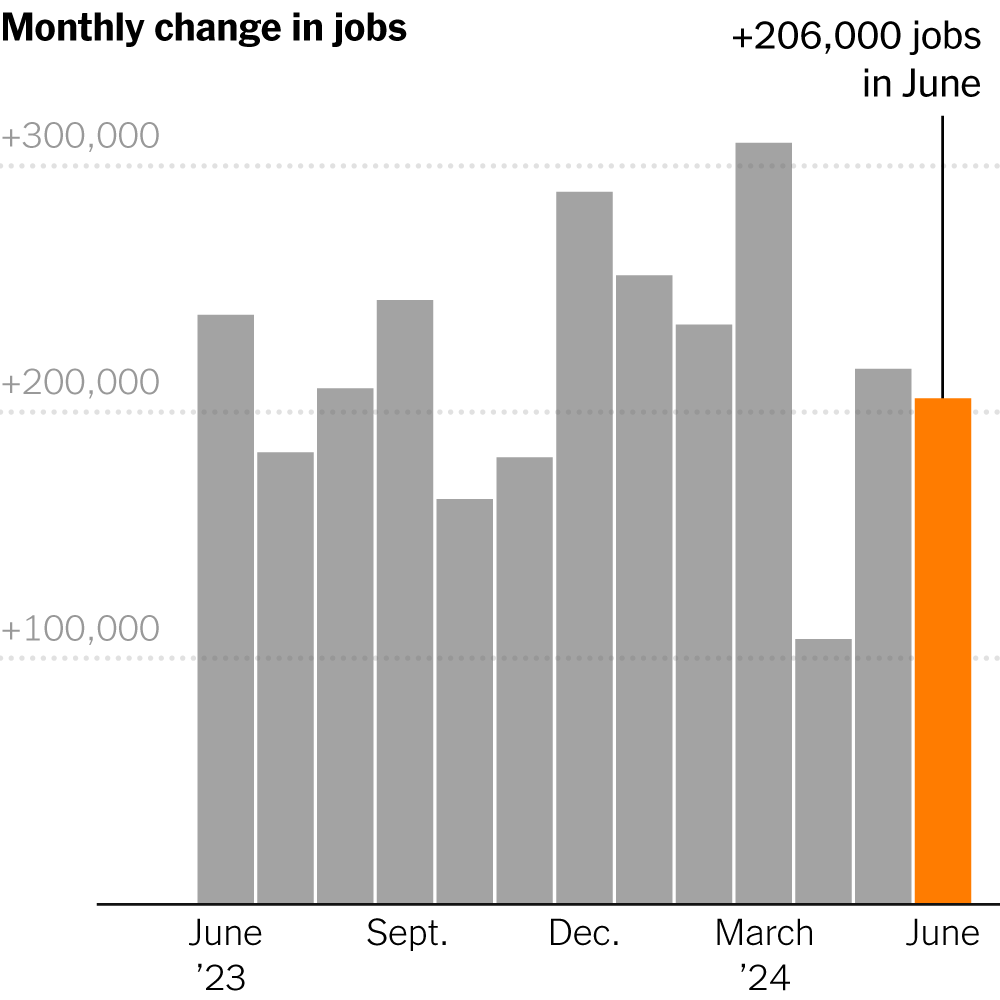
Following the BLS report, Treasury yields fell as investors considered the possibility that the slowing job growth and rising unemployment rate might prompt the Federal Reserve to cut interest rates in the coming months. The S&P 500 opened little changed, but stocks nudged up slightly amid the news. The June employment report, showing a deceleration in hiring and wage growth, alongside a rise in the jobless rate, bolsters bets that the Fed may lower rates as early as September. This aligns with futures indicating investor expectations of two rate cuts by the end of the year.
Labour win landslide victory in U.K. election
The U.K.'s Labour Party achieved a significant parliamentary majority in the general election, ending the Conservative Party's 14-year reign. Early Friday morning, Labour surpassed the threshold needed to govern alone, leading to outgoing Prime Minister Rishi Sunak conceding defeat and subsequently resigning as Conservative Party leader. Keir Starmer, leader of the center-left Labour Party, will become the next prime minister. In his victory speech, Starmer acknowledged the efforts of his colleagues, stating, "We did it. You campaigned for it, you fought for it — and now it has arrived ... change begins now." This victory marks Labour's second-largest majority, only beaten by Tony Blair's 179-seat win in 1997, while the Conservatives faced their worst-ever defeat ever, losing more than 250 seats.
The election saw millions across England, Scotland, Wales, and Northern Ireland vote for their local representatives in the 650-member House of Commons. The Conservative Party's substantial loss has relegated it to opposition status, with several cabinet ministers and former Prime Minister Liz Truss losing their seats. Nigel Farage's populist Reform UK party won its first seats and significantly split the right-wing vote, contributing to the Conservative downfall. The Liberal Democrats emerged as the third-largest party in parliament with their best result in years, and the Greens also made gains. Conversely, the Scottish National Party suffered a collapse, losing nearly 40 seats, most of them to Labour.

During his inauguration speech at Downing Street, Prime Minister Keir Starmer emphasized the need for a "bigger reset" for Britain, pledging that his government will prioritize national renewal and address the urgent challenges posed by Brexit, the Covid-19 pandemic, and the ongoing cost-of-living crisis fueled by the war in Ukraine. "Our work is urgent, and we begin it today," Starmer affirmed.
What's Ahead
Central Bank Watch: Fed Chair Powell testifies to Congress on Tuesday. The only other central bank activity of note is the Reserve Bank of New Zealand Interest Rate Decision and Monetary Policy Statement on Wednesday.
Macro Data Watch: The main macro data release this week is the US CPI data on Thursday. Other releases of note are the Chinese CPI data on Wednesday, UK GDP data and German CPI data on Thursday, then US PPI data on Friday.
Date
Major Macro Data
07/08/2024
Nothing of note
07/09/2024
Fed Chair Powell testifies; UK Retail Sales
07/10/2024
Chinese CPI; RBNZ Interest Rate Decision and Monetary Policy Statement
07/11/2024
German CPI; UK GDP; US CPI
07/12/2024
German Retail Sales; US PPI; Michigan Consumer Sentiment Index
.jpg)