
Week commencing July 1st 2024
TradeDay Macro Matters
Macroeconomic / Geopolitical developments
- US stock indices held H1 2024 gains last week
- US PCE inflation data cools
- Biden falters in Presidential debate
- Japanese Yen multi-decade low boosts Nikkei
- Big, holiday-shortened week ahead: Fed Minutes and US Jobs data
- What's Ahead
US stock indices held H1 2024 gains last week
Despite a relatively quiet week in terms of news and market activity, U.S. stock indices managed to hold onto their impressive gains from the first half of 2024. The S&P 500 and Dow Jones Industrial Average edged lower by 0.1% for the week, while the Nasdaq Composite saw a modest increase of 0.2%. This lull in market activity is seen as a precursor to the upcoming second-quarter earnings reports, which are expected to provide more direction. The S&P 500 closed out the first six months of 2024 with a significant 14.5% advance, whilst the Nasdaq Composite has been the standout performer, boasting an 18.5% gain year-to-date, leading the broader market. This has been driven largely by a surge in technology stocks fueled by the artificial intelligence boom and anticipation of potential Federal Reserve rate cuts.
However, recent concerns about market breadth and the dominance of mega cap tech stocks have started to weigh on investors' minds. The slight dip in the S&P 500 this week reflects these worries, even as the market remains optimistic about the potential for a favorable shift in monetary policy later in the year.
US PCE inflation data cools
U.S. monthly inflation remained unchanged in May as a modest increase in service costs was offset by the largest drop in goods prices in six months, edging the Federal Reserve closer to potentially cutting interest rates later this year. The Commerce Department's report on Friday revealed a marginal rise in consumer spending, while underlying prices advanced at the slowest pace in six months, boosting optimism for a "soft landing" for the economy where inflation cools without sparking a recession and high unemployment.
The Personal Consumption Expenditures (PCE) index, the Fed's preferred inflation measure, showed a year-on-year change of 2.6% in May, down from 2.7% in April. The core PCE, which excludes volatile food and energy prices, also declined from 2.8% to 2.6%. This is significant as the Fed has been looking for more evidence of cooling prices before considering rate cuts. Fed Chair Jerome Powell emphasized the need for more consistent data to ensure inflation is sustainably moving toward the Fed's 2% target.
Biden falters in Presidential debate
President Joe Biden delivered a shaky and halting performance during Thursday's Presidential debate, struggling with repeated lines, coughs, and misstatements, which raised concerns about his fitness for another term. His performance was marked by stumbling over key numbers and extended freezes, stoking fitness and acuity concerns among Democrats and the electorate. Meanwhile, his Republican rival, Donald Trump, capitalized on Biden’s missteps by unleashing a barrage of criticisms, many of which were familiar falsehoods, attacking Biden on issues ranging from immigration to the economy.
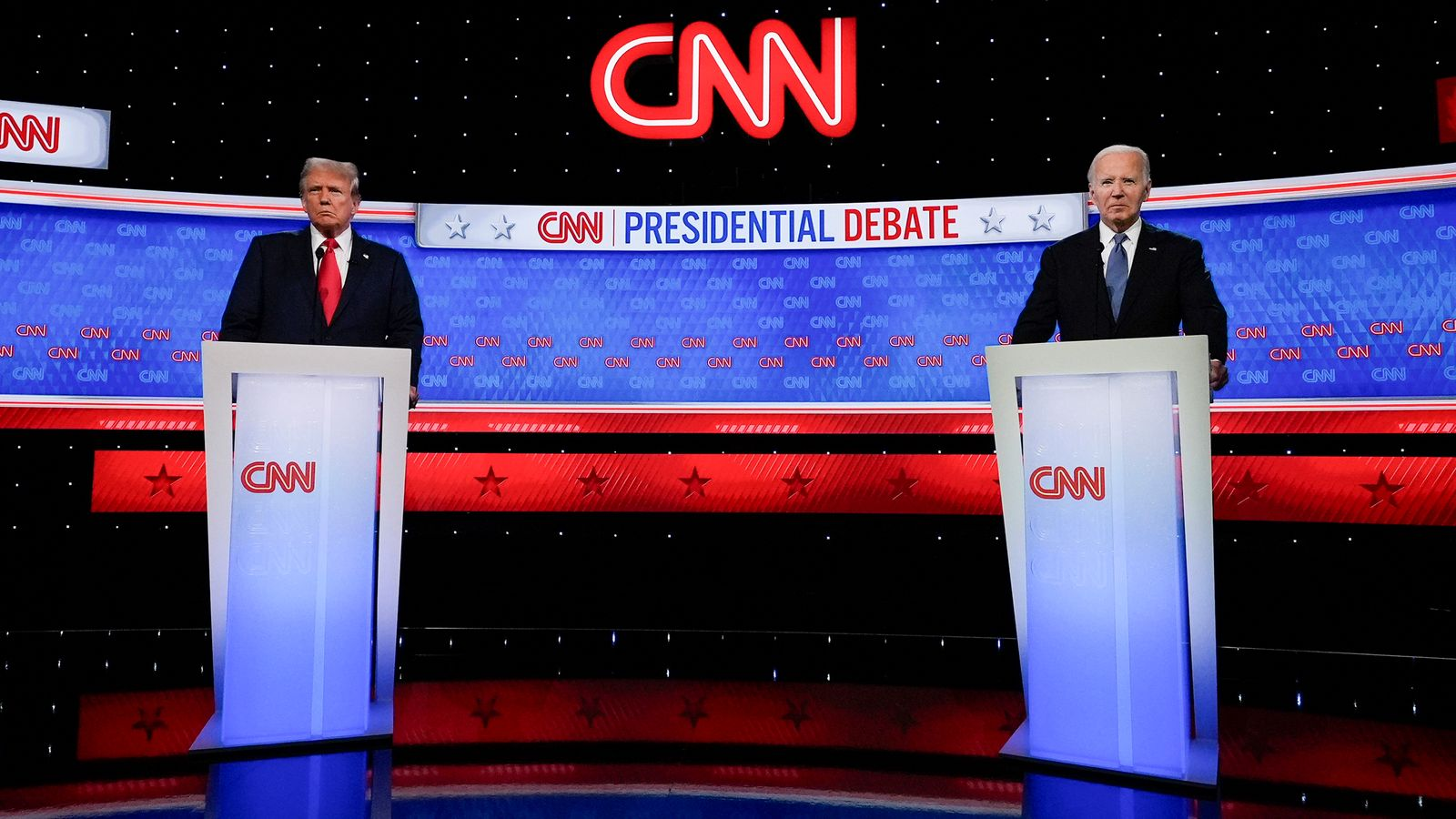
The debate saw Biden faltering particularly in the first half-hour, although he regained some composure when he labeled Trump a "felon" over his hush money scandal. However, Trump swiftly retaliated by highlighting the recent conviction of Biden’s son, Hunter, adding to the night’s personal attacks. Both candidates traded barbs on various topics, including abortion, immigration, and the economy, with Trump accusing Biden of failing to secure the southern U.S. border and Biden blaming Trump for enabling the elimination of nationwide abortion rights by appointing conservative Supreme Court justices.
Despite Biden’s apparent struggle, Vice President Kamala Harris defended his record in office, urging voters to judge the candidates based on their years of service rather than the debate performance. Trump's refusal to take responsibility for the January 6 Capitol attack and his false claims about winning the 2020 election highlighted his own vulnerabilities. Political analysts like Matt Grossmann noted that while Trump didn't necessarily gain new supporters, Biden's performance might have reinforced concerns about his age and capability, potentially impacting his campaign moving forward.
Japanese Yen multi-decade low boosts Nikkei
The Japanese Yen fell to a 38-year low, struggling to stay below 160 per dollar, sparking market speculation about potential intervention to support the currency. The Yen's sharp decline—down 2% in June and 12% year-to-date against the US Dollar—has been driven by substantial interest rate differentials between the United States and Japan. This divergence has made the Yen an attractive financing currency for carry trades, where investors borrow in low-interest currencies and invest in higher-yielding assets.
Despite its dip below the critical 160 level, traders are anxious about possible intervention from Japanese authorities, especially after a significant intervention earlier this year when officials spent 9.79 trillion yen ($60.94 billion) to strengthen the currency. This has led to speculation that traders might push the Yen lower to test the Japanese government's resolve. Japan's top currency official has indicated readiness to act if the Yen falls too far, though some investors believe a new trigger point for intervention could be 165 Yen to the US Dollar.
The Yen's prolonged weakness, initially a boon for Japanese stocks by benefiting exporters, has recently shown a negative correlation with the Nikkei 225. Concerns are mounting about the adverse effects of the Yen's decline, such as increased import costs and reduced consumer purchasing power, which could harm the economy. Fund managers are also wary of the potential volatility that government intervention might introduce. The Nikkei 225 Stock Average has gained about 4% in US currency terms this year, compared to a 15% increase in the S&P 500.
Big, holiday-shortened week ahead: Fed Minutes and US Jobs data
The upcoming holiday-shortened week, due to the July 4th celebrations, is poised to be significant for U.S. markets with key economic indicators and insights from the Federal Reserve on the agenda. Friday’s U.S. jobs report is anticipated to be the highlight, providing crucial information as investors seek clarity on the potential timeline for interest rate cuts. Additionally, market participants will keep a close eye on comments from Federal Reserve Chair Jerome Powell and the minutes from the Fed's latest meeting, scheduled for release on Wednesday.
Friday’s nonfarm payrolls report is expected to show the addition of 189,000 jobs in June, following a stronger-than-anticipated increase of 272,000 jobs in May. This data is vital for gauging the health of the labor market and its influence on future Fed policy. The Federal Reserve recently decided to keep rates unchanged and indicated that rate cuts might not commence until late in the year, depending on more definitive signs of inflation easing towards the central bank’s 2% target or a significant cooling in the labor market. Prior to the payrolls data, a report on Tuesday is expected to show a decline in job openings for May, suggesting companies are having more success filling positions.
In addition to the jobs report, Jerome Powell is scheduled to speak at the European Central Bank’s annual forum in Sintra, Portugal, on Tuesday. Powell, along with ECB President Christine Lagarde, will participate in a panel discussion on "monetary policy in an era of transition," with investors looking for any new insights on interest rate trajectories. The minutes from the Fed’s June meeting, set for release on Wednesday, will be closely analyzed for the central bank’s economic outlook and the factors influencing its monetary policy decisions.

The holiday schedule will see the NYSE, Nasdaq, and bond markets closed on Thursday, July 4th, for Independence Day, with early closures on July 3rd, adding to the week’s condensed trading activity and focus on critical economic data releases and Fed communications.
Thursday also sees the UK Parliamentary Election.
What's Ahead
Geopolitics Watch: Thursday brings the UK Parliamentary Election and the US Independence Day holiday.
Central Bank Watch: The main central bank activities this week are the The Reserve Bank of Australia Minutes on Tuesday and the US FOMC Minutes on Wednesday.
Macro Data Watch: The key macro data released this upcoming week are the global PMI data Monday and Wednesday, and the US Employment data on Friday.
Date
Major Macro Data
07/01/2024
Global Manufacturing PMI; US ISM Manufacturing PMI; Germans CPI;
07/02/2024
RBA Minutes; EU CPI
07/03/2024
Global Composite and Service PMI; US ISM Service PMI; ADP Employment; US FOMC Minutes
07/04/2024
US Independence Day holiday; UK Parliamentary Election; German Factory Orders; ECB Monetary Policy Meeting
07/05/2024
EU Retail Sales; Canadian and US Employment reports
.jpg)