
Week commencing April 8th 2024
TradeDay Macro Matters
Macroeconomic / Geopolitical developments
- US and global stocks slide
- Kashkari questions rate cuts
- Oil surges
- US March Employment report comes in strong
- What’s Ahead
US and global stocks slide
Stock markets witnessed a sharp decline on Thursday, triggered by soaring oil prices and cautionary remarks from a Federal Reserve official regarding potential interest rate cuts. The Dow Jones Industrial Average plummeted, while the S&P 500 and Nasdaq Composite also experienced notable losses. This marked the S&P 500's steepest single-day decline since February 13 and the DJIA's most substantial drop in over a year.
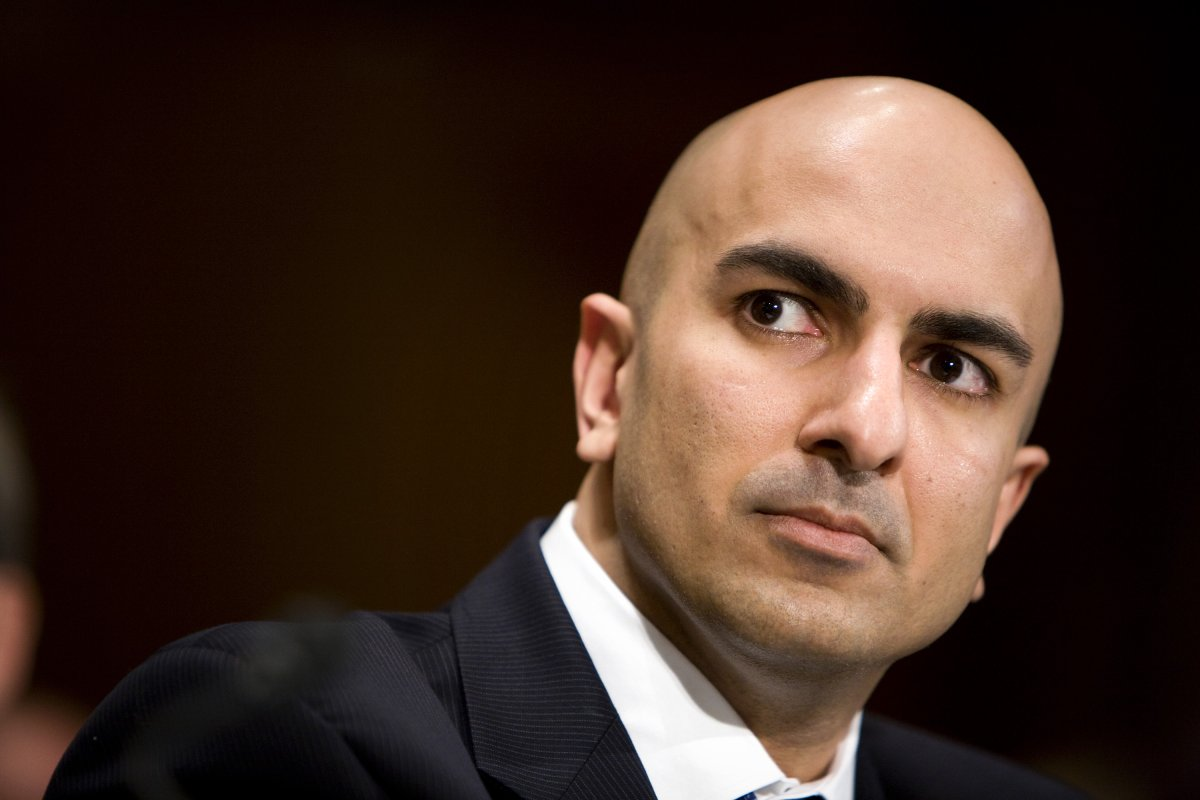
The downward trajectory intensified following comments from Minnesota Fed President Neel Kashkari, who suggested that the Fed might refrain from implementing interest rate cuts if inflationary progress stalls. These remarks dampened market sentiment, causing a reversal in midday gains. Additionally, escalating tensions in the Middle East contributed to the market downturn, with oil futures surging over 1%. West Texas Intermediate settled higher, while Brent closed at their highest levels since October.
Prior to Kashkari's statements, the market had shown resilience despite a rocky start to the second quarter. Federal Reserve Chair Jerome Powell had previously dampened concerns about the central bank's commitment to rate cuts. However, Thursday's market performance underscored investors' sensitivity to geopolitical tensions and monetary policy uncertainties. On Friday, U.S. stock futures rebounded after a period of decline that saw the DJIA's worst four-day stretch in terms of point losses since March 2023.
.
Kashkari questions rate cuts
Minneapolis Federal Reserve Bank President Neel Kashkari raised concerns about potential interest rate cuts for 2024, suggesting that if inflation stalls, the need for any cuts by year-end might be questioned. Kashkari indicated that if inflation remains stagnant, the Fed could prolong maintaining its benchmark policy rate within the current range. He even hinted at the possibility of further rate increases if necessary, although such a scenario is not currently deemed likely.
However, despite Kashkari's remarks, Goldman Sachs Chief Economist Jan Hatzius expressed a differing view. Hatzius maintained an expectation of three interest rate cuts by the Fed this year, stating that it would be "very surprising" if no cuts were deemed necessary. He highlighted Kashkari's comments about zero rate cuts as indicative of the uncertainty surrounding the timing and necessity of potential interest rate adjustments.
The Federal Reserve, in its last meeting, opted to keep interest rates unchanged for the fifth consecutive time, signaling a continuation of its wait-and-see approach. While the Fed still anticipates three quarter-percentage point cuts by the end of the year, traders have adjusted their expectations, with a reduced likelihood of a rate cut at the June policy meeting compared to previous estimates, now sitting around 60%.
Oil surges
Oil prices surged on Thursday amid escalating geopolitical tensions in the Middle East, particularly involving Israel and Iran, raising concerns about potential disruptions to global oil supplies. Brent crude futures surpassed $90 a barrel for the first time since October, while West Texas Intermediate climbed above $86.
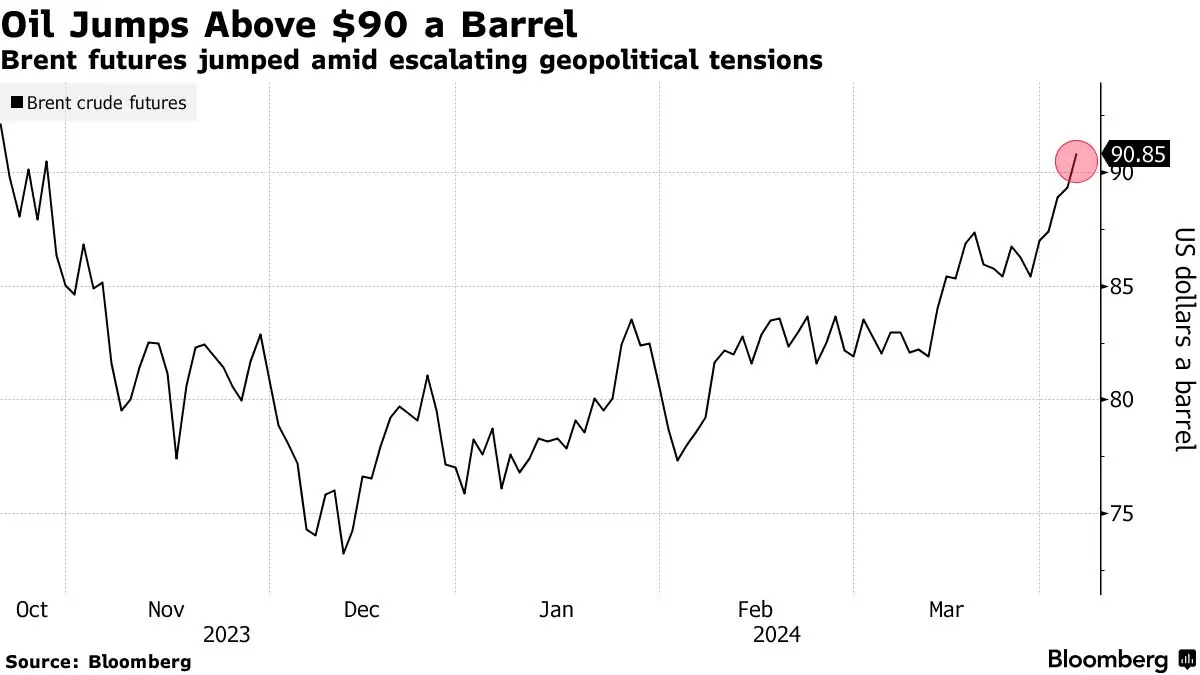
The saber-rattling between Iran and Israel, including retaliatory threats and military actions, has fueled fears of a regional conflict that could severely impact oil production and distribution. Iran's vow to retaliate for an airstrike on its embassy in Syria, believed to be orchestrated by Israel, coupled with Israel's defensive and offensive actions against Iran and its proxies, has heightened uncertainty in the oil market, driving prices upward.
This geopolitical unrest has become a key factor influencing the trajectory of oil prices, with traders closely monitoring developments in the region to gauge potential supply disruptions and market implications.
US March Employment report comes in strong
In yet another surprising turn, the March employment report from the Bureau of Labor Statistics revealed that employers added a remarkable 303,000 jobs, far surpassing economists' forecasts of 205,000 jobs. Additionally, the unemployment rate declined from 3.9% to 3.8%, defying expectations and highlighting the continued strength of the US labor market.
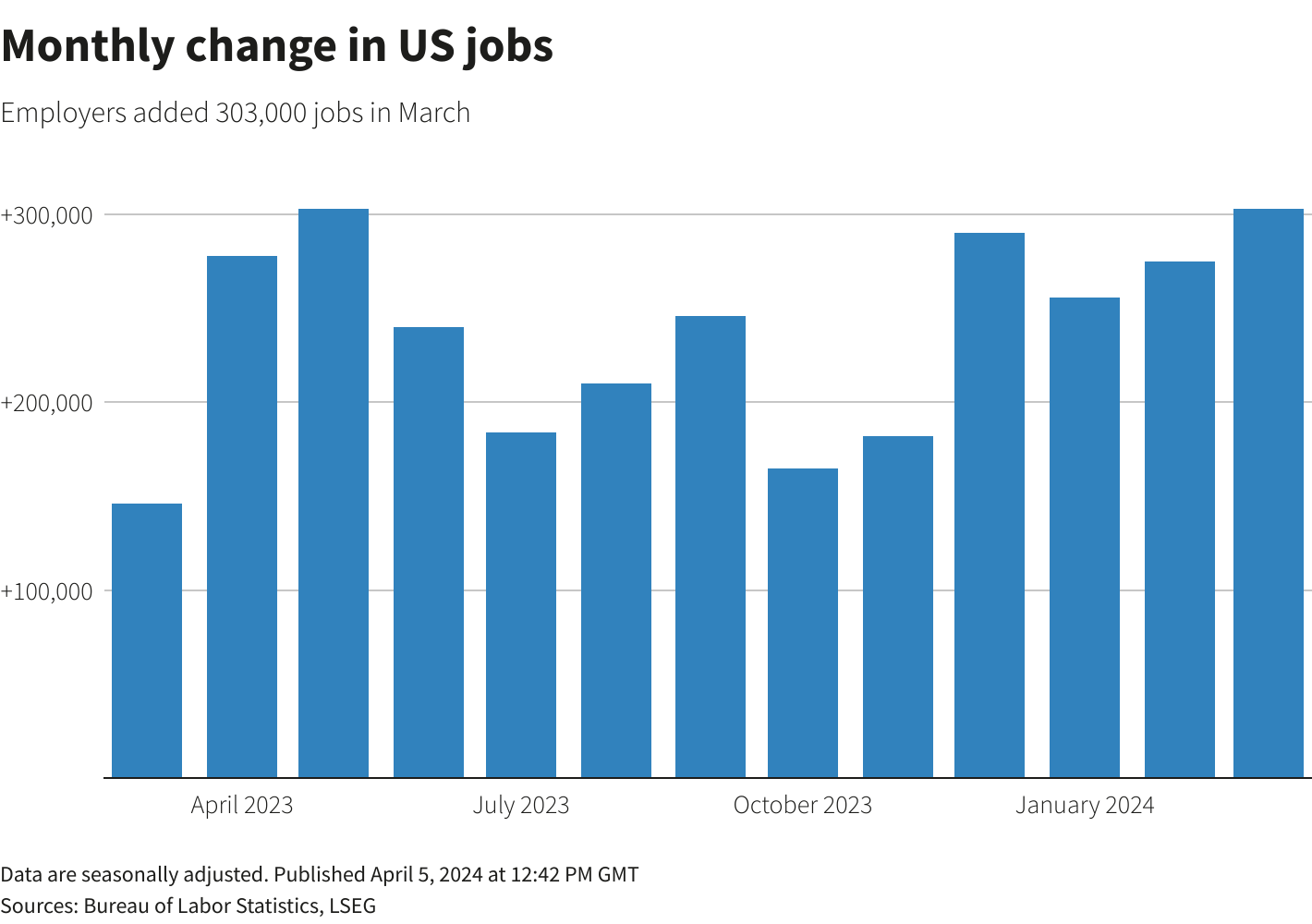
This robust job growth comes amidst expectations of a slowdown in employment as the pandemic recovery progresses and despite the Federal Reserve's series of 11 interest rate hikes. Furthermore, while annual wage gains slowed slightly to 4.1% from 4.3%, they remain strong, aiding Americans in recovering from the economic impacts of the pandemic and inflation.
This report not only underscores the resilience of the US labor market but also suggests a moderation in inflationary pressures, aligning with the Federal Reserve's objectives. The current state of the US labor market is historically strong, with 39 consecutive months of job growth and an unemployment rate below 4% for 26 consecutive months, reflecting sustained economic stability and growth.
What's Ahead
Central Bank Watch: The most important central bank activities this week are the FOMC Minutes on Wednesday ECB Monetary Policy Decision and Statement on Thursday. We will also observe the RBNZ and BoC Interest Rate Decisions and Statements Wednesday.
Macro Data Watch: Global CPI data is released through the week, with the US releasing Wednesday, China Thursday and Germany and France on Friday. Other standout data this week is Us and China PPI, both out Thursday, followed by UK GDP, Industrial and Manufacturing Production on Friday.
Date
Major Macro Data
04/08/2024
German Industrial production; EU Investor Confidence
04/09/2024
Fed's Kashkari speech; UK Retail Sales; Australia Consumer Confidence
04/10/2024
RBNZ and BoC Interest Rate Decisions and Statements; US CPI (MoM, YoY); FOMC Minutes
04/11/2024
China PPI and CPI (MoM, YoY); ECB Monetary Policy Decision and Statement; US PPI (MoM, YoY)
04/12/2024
China Trade Balance; German CPI (MoM, YoY); UK GDP, Industrial and Manufacturing Production; France CPI; Michigan Consumer Sentiment Index
.jpg)