
Week commencing April 1st 2024
TradeDay Macro Matters
Macroeconomic / Geopolitical developments
- US and global stocks in positive consolidation
- US data mixed
- Cook and Goolsbee reinforce Fed stance
- Bank of Japan threat of currency intervention
- What’s Ahead
US and global stocks in positive consolidation
Most markets in Europe and North America were closed Friday for a public holiday and in Europe will remain closed until their openings on Tuesday. Following a mixed week of trading, both U.S. and global stocks sought stability amid various market dynamics.
Over the shortened trading week, major indexes in the US continued their upward trajectory, concluding a quarter marked by robust gains. The benchmark S&P 500 index capped its best first-quarter performance in five years, ending Thursday slightly higher. Both the Dow Jones Industrial Average and the S&P 500 closed at record highs, with small gains. However, the Nasdaq Composite experienced a marginal decline. These developments followed a relatively subdued start to the week for U.S. stocks, with slight declines observed following significant gains in the previous week.
In Europe, despite concerns over a significant economic slowdown in some major economies, most European markets advanced during the week leading up to the Easter holiday weekend. The STOXX Europe 600 Index achieved a record intraday high, registering a gain of 0.59% in local currency terms. These gains underscored the resilience of European markets amidst economic headwinds.
In Asia, Japan's Nikkei 225 index rebounded slightly, gaining later in the week after a previous decline, while China's CSI 300 index also closed higher at the end of the week.
.
US data mixed
The latest data from the United States reveals a mixed economic landscape. Gross domestic product (GDP) for the fourth quarter of 2023 was revised up to a 3.4% annualized rate, indicating stronger-than-expected growth driven by robust consumer spending and business investments in nonresidential structures. Corporate profits also saw a healthy increase, bolstering the Gross Domestic Income (GDI) growth and reflecting positively on the overall economic health, according to the Commerce Department.
US Consumer Confidence remained relatively steady in March, with the Conference Board reporting a marginal dip in its Consumer Confidence index to 104.7, reflecting concerns about the political environment ahead of the presidential election. Although recession fears have been on the decline, worries about the nation's political climate have become more pronounced among consumers, contributing to the stagnation in confidence levels.
.
Inflation data presented a mixed picture as well. While the Personal Consumption Expenditures (PCE) price index excluding food and energy met expectations, increasing 2.8% on a 12-month basis and at 0.3% monthly. Consumer spending surged beyond estimates, rising by 0.8% in February. Including volatile food and energy costs, the headline PCE reading showed a 0.3% increase for the month, slightly below expectations, and 2.5% year-on-year. This uptick in spending was accompanied by a slight softening in personal income growth, suggesting a complex interplay of factors influencing consumer behavior. The Federal Reserve, closely monitoring inflation indicators, may remain cautious before considering any interest rate adjustments, particularly as core PCE inflation continues to hover above the central bank's 2% target.
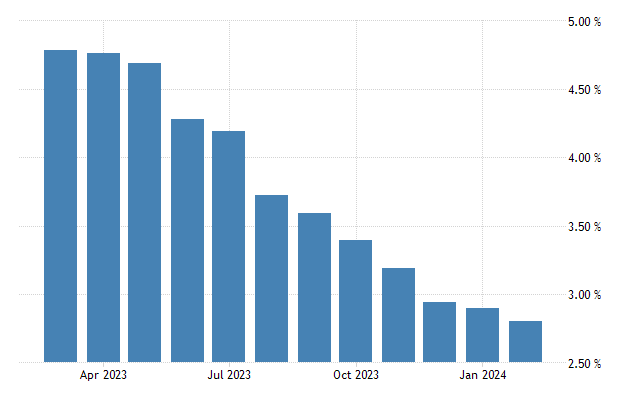
US Core PCE
Cook and Goolsbee reinforce Fed stance
Federal Reserve Bank of Chicago President Austan Goolsbee and Fed Governor Lisa Cook reinforced the central bank's position regarding interest rate cuts. Goolsbee, aligning with the median estimate of policymakers, anticipated three rate reductions this year, emphasizing the need to balance the dual mandate. Cook echoed caution, highlighting the necessity for careful deliberation before implementing rate adjustments.

In late March, the Fed maintained its guidance for three interest-rate cuts this year, citing close monitoring of inflation trends and their alignment with the 2% target. Despite faster-than-expected consumer price increases in January and February, Goolsbee suggested that the broader economic trajectory remains consistent, pointing to previous disinflation trends.
The market's response reflected a wait-and-see approach, with expectations for a Fed rate cut in June on the rise. Market indicators now suggest a 71.9% probability of a 25 basis point cut, up from around 54.7% a week ago. This sentiment underscores the market's confidence in the Fed's strategy of prudent delay in rate adjustments, preserving policy flexibility for potential future needs.
Bank of Japan threat of currency intervention
Concerns over the weakening of the Yen prompted Japan's major monetary authorities, including the Bank of Japan (BOJ), the Finance Ministry, and Japan’s Financial Services Agency, to convene an emergency meeting. They expressed readiness to intervene in the market to counter disorderly currency moves, especially as the Yen touched a 34-year low against the dollar.
While these discussions unfolded, the Yen's value hovered around 151.30 per dollar. Despite the warnings, market observers remained skeptical about the immediate effectiveness of intervention at current levels, preferring a possible intervention closer to the 155.00 mark. The last direct intervention by Japanese authorities was witnessed in 2022.
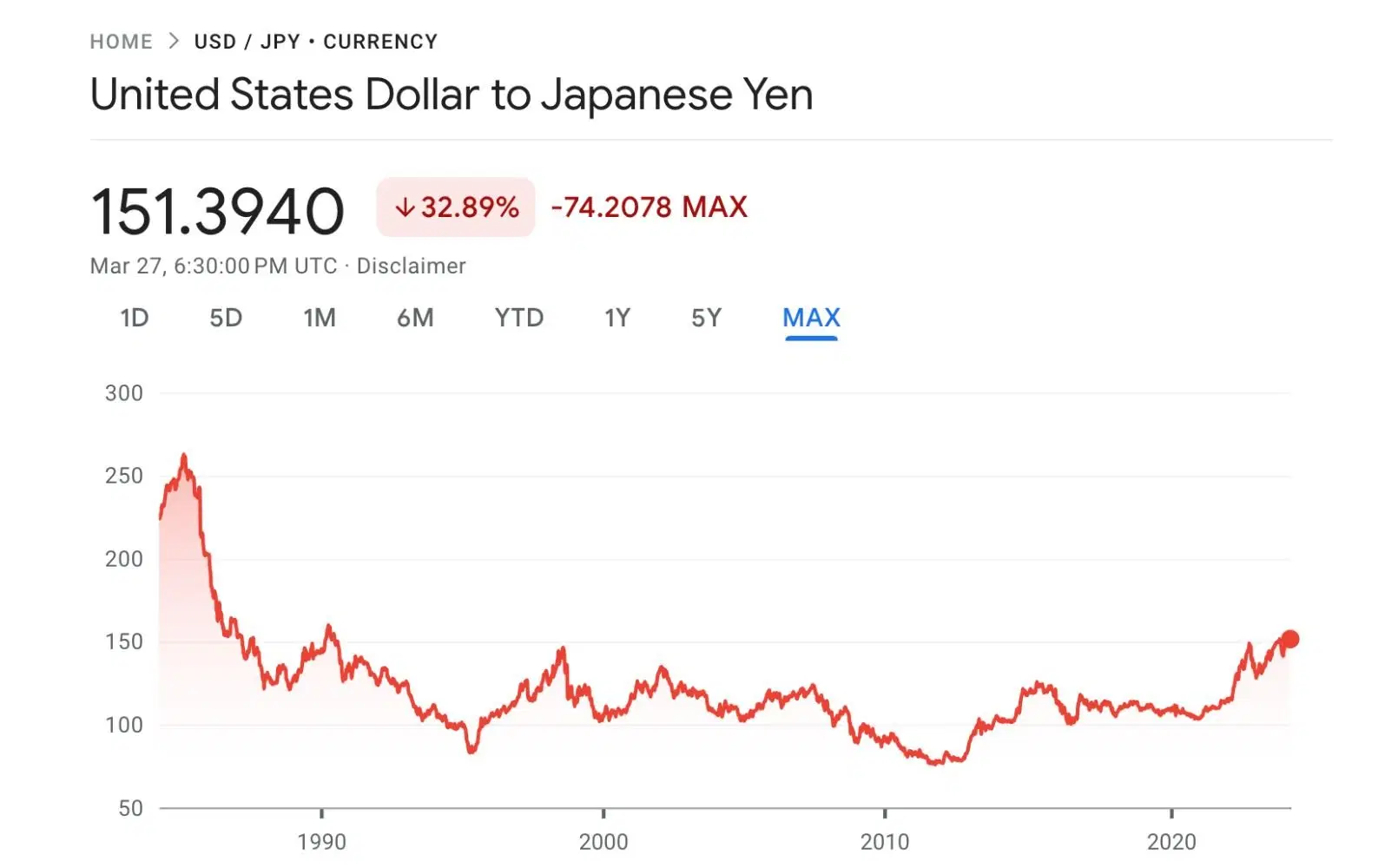
The elevated threat of BOJ intervention casts a shadow over the USD/JPY exchange rate, potentially limiting its upward momentum. Despite this, wider interest rate differentials and robust market conditions suggest that significant depreciation of the Yen may be unlikely.
At the recent BOJ policy meeting, board members advocated for a gradual approach to policy normalization, highlighting concerns about the economy not yet warranting swift interest rate hikes. BOJ Governor Kazuo Ueda reiterated the bank’s accommodative stance, emphasizing the lingering uncertainty surrounding inflation expectations.
What's Ahead
Central Bank Watch: No Central Bank activity of note, but we are watching for further indications for the path of future US interest rates from FOMC speakers.
Macro Data Watch: Global PMI data is released through the week, with the US ISM PMI data of particular note on Monday and Wednesday. But the standout for the week is the US Employment report on Friday,
Other: US and European cash and futures markets are closed for an Easter holiday on Monday 1st April. This may cause US markets to experience reduced liquidity.
Date
Major Macro Data
04/01/2024
JChina Caixin Manufacturing PMI; Canada S&P Global Manufacturing PMI; US ISM Manufacturing PMI
04/02/2024
Germany and Italy HCOB Manufacturing PMI; German CPI (MoM, YoY); US Factory Orders and JOLTS Job Openings
04/03/2024
China Caixin Services PMI; EU CPI (MoM, YoY); US ADP Employment Change; US S&P Global Composite PMI and ISM Services PMI
04/04/2024
German HCOB Composite and Services PMI; EU HCOB Composite PMI; EU PPI (MoM, YoY)
04/05/2024
EU Retail Sales (MoM, YoY); US and Canada Employment Reports
.jpg)