
Week commencing July 15th 2024
TradeDay Macro Matters
Macroeconomic / Geopolitical developments
- US Stock averages hit new records, as rotation dominates
- US inflation cools
- US yields plunge post CPI, with a more dovish Fed anticipated
- US earnings season kicks off with financials dipping
- Trump assassination attempt. Biden gaffes, again
- What's Ahead
US Stock averages hit new records, as rotation dominates
US stock averages soared to new records last week, fueled by optimism that the Federal Reserve might start cutting interest rates by September. The Dow Jones Industrial Average surged 1.6% to end the week at 40,001, marking a 6.1% increase year-to-date. Similarly, the S&P 500 Index rose 0.9% to close at 5,615, up 17.7% for the year. The tech-heavy NASDAQ inched up 0.2%, finishing at 18,398, and boasting a 22.6% increase year-to-date. Despite mixed results from major banks, the overall market rally reflected strong investor sentiment driven by expectations of robust corporate profit growth.
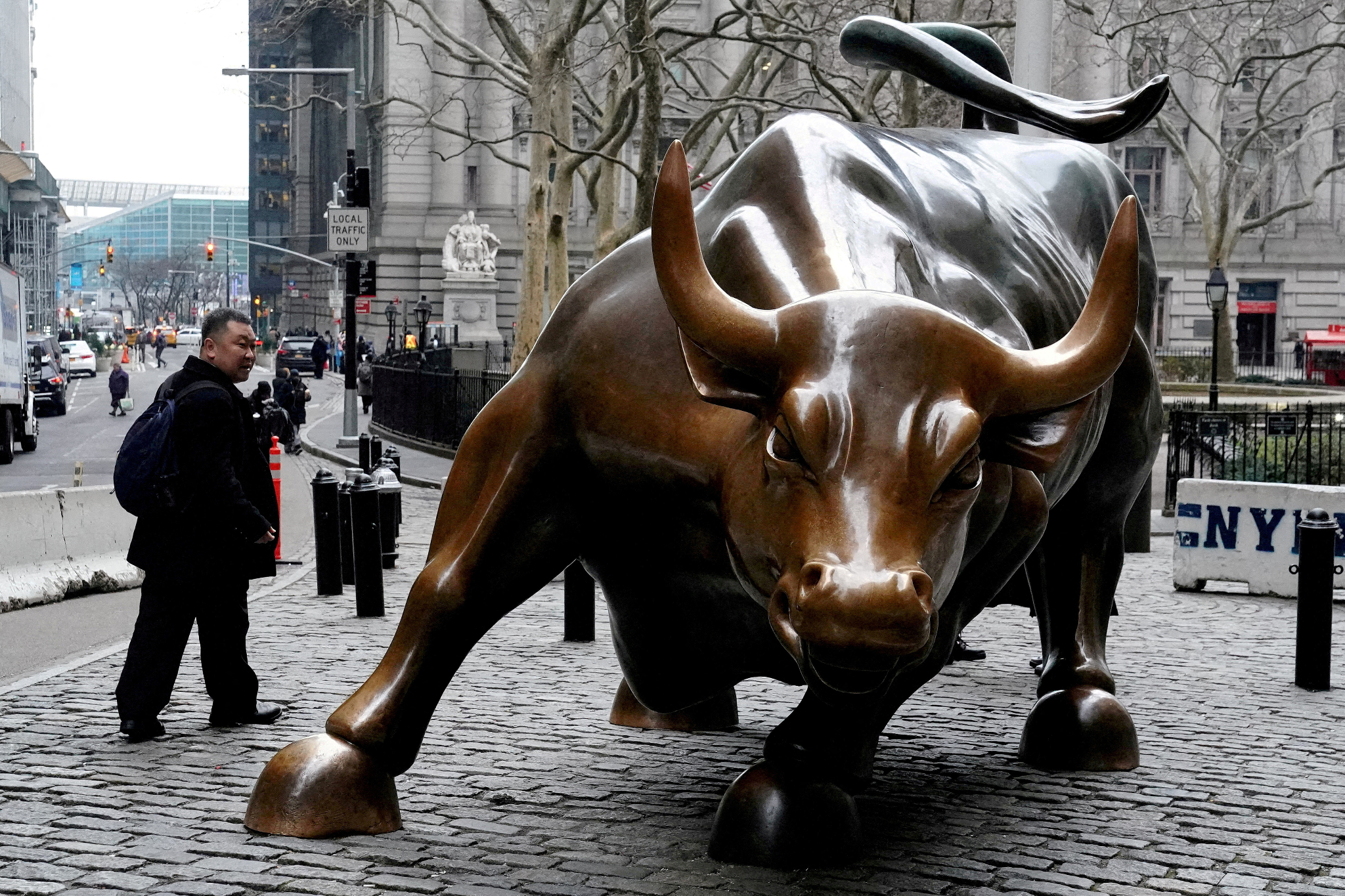
The market also saw a notable rotation, with large-cap value stocks outperforming their growth counterparts. A US large-cap value index posted a 2.8% total return for the week, while the growth index slipped by 0.4%, narrowing the growth sector's year-to-date outperformance. Investors are now betting on strong profit growth beyond tech giants like Nvidia, anticipating a 9.6% jump in second-quarter earnings for S&P 500 firms, despite expected declines in real estate, industrials, and materials sectors.
US inflation cools
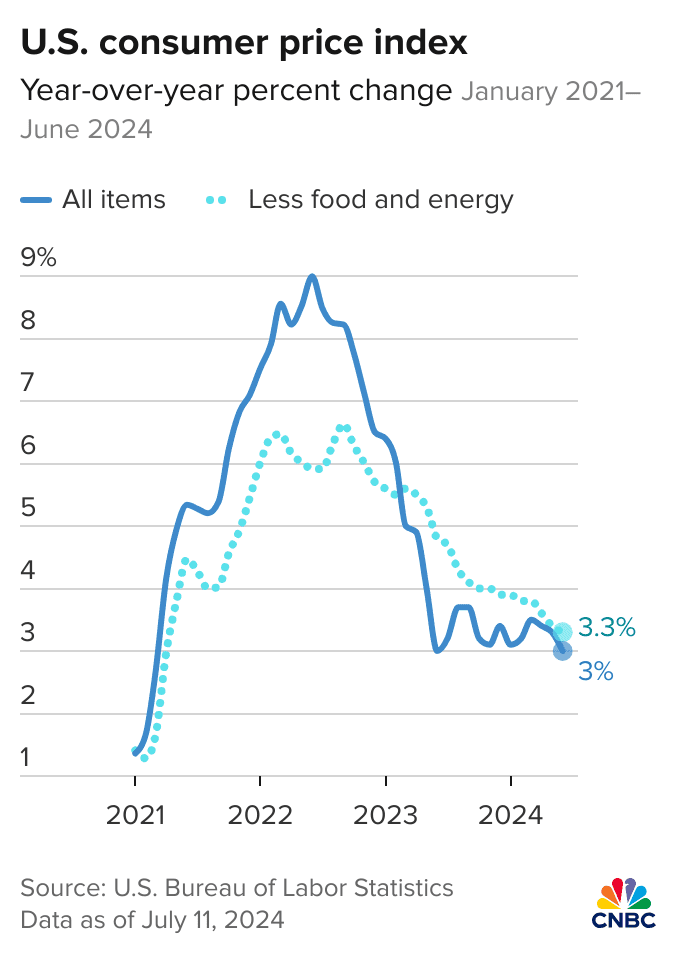
Price rises in the US slowed significantly in June, raising hopes that the world's largest economy is moving past the high inflation triggered by the COVID-19 pandemic and war in Ukraine. According to the Labor Department, prices rose by 3% over the 12 months to June, marking the slowest annual increase in a year. Lower petrol prices and moderating rents were key factors in this deceleration. This marks the third consecutive month that inflation has fallen, easing financial pressures on households and potentially paving the way for the
Federal Reserve to consider cutting interest rates as soon as September.
The Federal Reserve's key lending rate has stood at more than 5.3% since last year, a roughly two-decade high, with high borrowing costs weighing on the economy and helping to reduce inflationary pressures. Analysts suggest that the latest report might convince the Fed that its efforts to combat inflation are yielding the desired results. The consumer price index report showed that prices from May to June actually dropped by 0.1%, the first outright monthly decline in years, with the core consumer price index, which excludes food and energy costs, climbing just 0.1% from May, the smallest advance in three years.
Following the consumer price index report, Treasuries rallied, and traders nearly fully priced in rate cuts for September and December. Policymakers will have a chance to signal their next moves when they meet later in July, especially given that the unemployment rate has now risen for three straight months.
US yields plunge post CPI, with a more dovish Fed anticipated
US Treasury bond yields plunged last Thursday following a surprise drop in inflation, sparking speculation that the Federal Reserve might start lowering interest rates in 2024. The CPI report revealed a month-to-month reading of -0.056% (rounded to -0.1%), which triggered significant movements in the bond market. The US 10-year Treasury yield dropped to 4.21%, while the six-month Treasury yield fell by a combined 10 basis points over two days, settling at 5.23%.
The latest inflation data has reinforced expectations that the Fed could begin cutting rates by September, with traders now pricing in a higher probability of such a move. Although the six-month yield is now slightly below the Fed’s target range for the federal funds rate, shorter-term yields showed minimal changes, indicating no immediate expectation of a rate cut in July. The one-month and two-month yields even saw slight increases, reflecting a more cautious short-term outlook.
The Treasury market's reaction to the benign inflation data has strengthened the belief that the Federal Reserve will cut interest rates at least twice this year. The odds of a September rate cut have surged to around 70%, with market expectations also pricing in rate cuts in November and December. Some analysts predict that the 10-year Treasury yield, which peaked above 5% last year, could return to 4%, a level last seen in February, as the market anticipates a more dovish stance from the Fed.
US earnings season kicks off with financials dipping
The US earnings season began with mixed results from major financial institutions, reflecting both challenges and resilience within the sector. On Friday, JPMorgan Chase, Wells Fargo, Citigroup, and Bank of New York Mellon reported their second-quarter numbers, marking the start of the earnings season. Analysts had anticipated an overall earnings increase of 8.9% across the S&P 500 for the quarter, the strongest growth rate in over two years according to FactSet. Despite these high expectations, the financial sector's performance was varied, with two of the three major banks reporting year-over-year earnings declines.
JPMorgan Chase saw its second-quarter profit buoyed by rising investment banking fees, but its shares still fell by 1.2% Friday, suggesting investor caution. Wells Fargo experienced a significant drop, with its stock plummeting 6% Friday after failing to meet estimates for quarterly interest income. Citigroup, despite reporting a surge in investment banking revenue, saw a 1.8% decline in its share price Friday. These results underscore the pressures faced by the banking industry, including the impact of prolonged high interest rates and signs of financial strain among consumers. Investors will closely watch upcoming earnings reports for further indications of systemic weaknesses and the broader economic outlook.
Trump assassination attempt. Biden gaffes, again
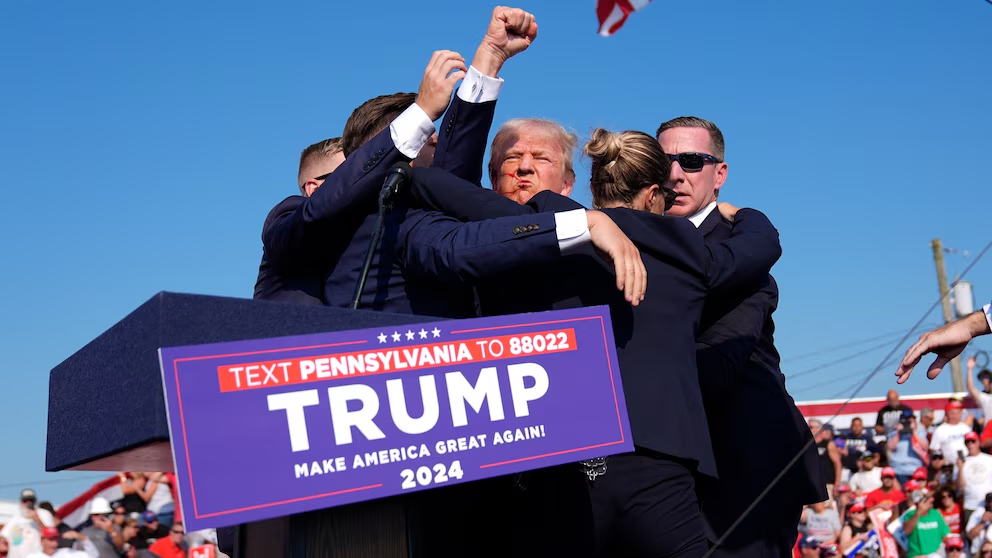
A bloodied Donald Trump was rushed off stage after being shot by Thomas Matthew Crooks in a suspected assassination attempt at a Pennsylvania rally. The former president was hit in the ear but is said to be “doing well”. In the moments after the shooting, Trump was swarmed and covered by his security agents. Emerging with his face streaked with blood, he pumped his fist in the air, mouthing "Fight! Fight! Fight!" The Trump campaign later confirmed he was "doing well" and suffered no major injuries besides a wound on his upper right ear. The FBI identified the 20-year-old shooter from Bethel Park, Pennsylvania, who was killed by Secret Service agents after firing from a rooftop. The attack killed one attendee and critically wounded two others, raising questions about the security provided to the Republican candidate and potentially reshaping the U.S. presidential race.
Meanwhile, President Joe Biden committed a notable gaffe during his closing remarks at the NATO summit in Washington, mistakenly introducing Ukrainian President Volodymyr Zelenskyy as "President Putin." Biden quickly corrected himself, adding humor to the situation, but the slipup was widely reported by international media, highlighting concerns about his age and mental acuity. This incident follows other recent verbal missteps, including referring to Vice President Kamala Harris as "Vice President Trump." These gaffes have fueled scrutiny of Biden's capability to lead, especially in the context of the upcoming election.
The assassination attempt on Trump has intensified the political atmosphere, with Biden's harsh criticisms of Trump now under the spotlight. Despite the attack, Trump remains defiant, continuing his campaign with vigor. Conversely, Biden has faced declining poll numbers and increased desperation in his rhetoric, previously labeling Trump as using "Hitler's language" and being "the biggest threat to democracy." The attempt on Trump’s life is expected to temper Biden's incendiary remarks, potentially altering the dynamics of their political rivalry as the election approaches.
What's Ahead
Central Bank Watch: Central bank focus will be on the ECB Interest Rate Decision and Monetary Policy Statement on Thursday.
Macro Data Watch: The main macro data releases this week are inflation data from the UK, EU, Canada and Japan, Retail Sales from China, Germany, and Canada, plus US and UK, US Industrial Production on Wednesday and the UK Employment Report on Thursday.
Earnings Watch: The US Q2 earnings season continues having kicked off on Friday with the financials, with further large financial sector companies reporting early in the week, including Goldman Sachs, BlackRock, Bank of America and Morgan Stanley, then we get the first of the FANG stocks, Netflix on Thursday.
Date
Major Macro Data
07/15/2024
Chinese Industrial Production, Retail Sales and GDP; German Retail Sales; EU Industrial Production
07/16/2024
German ZEW Survey; Canadian CPI; US Retail Sales
07/17/2024
UK Inflation Report (including CPI); EU CPI; US Industrial Production
07/18/2024
Japanese Trade Report; Australian Employment Report; UK Employment Report; ECB Interest Rate Decision and Monetary Policy Statement
07/19/2024
Japanese CPI; UK Retail Sales; Canadian Retail Sales
Date
Major Earnings Data
07/15/2024
Goldman Sachs; BlackRock
07/16/2024
United Health; Bank of America; Morgan Stanley
07/17/2024
ASML; J&J
07/18/2024
Netflix; Abbott Labs
07/19/2024
American Express
.jpg)