
Week commencing February 19th 2024
TradeDay Macro Matters
Macroeconomic / Geopolitical developments
- Stock averages chop lower and bounce, Bonds to higher yields through warmer US CPI
- Nvidia climbs higher, overtakes Amazon and Alphabet in market cap
- Nikkei hits multi decade high
- US CPI warmer than expected
- Markets pare back Fed rate cut expectations
- US Retail Sales decline more than expected
Stock averages chop lower and bounce, Bonds to higher yields through warmer US CPI
The release of the U.S. Consumer Price Index (CPI) report, showing higher-than-expected inflation figures, sparked a significant upheaval in both the stock and bond markets.
Bond prices plunged, leading to a surge in bond yields, as the CPI rose beyond forecasted levels for both month-on-month and year-on-year metrics. The robust uptick in services inflation, which registered its highest surge in nearly two years, compounded concerns given the significant role services play in the U.S. economy.
The surge in yields was not limited to the U.S., as European and U.K. government bond yields also climbed to multi-month highs. The 10-year Treasury note reached a 2-1/4 month high of 4.291%, reflecting broader market concerns about inflationary pressures and monetary policy outlook. The VIX Fear Index spiked by 28%, indicating heightened market volatility, while inverse ETFs rallied sharply.
In response to the CPI report, the NYSE, Nasdaq, and other exchanges experienced a wave of sell orders, triggering a downturn in stock prices, as investors recalibrated their expectations. While recent market optimism had driven indices to record highs, the spike in bond yields following the CPI data tempered expectations of imminent Fed rate cuts, leading to a sell-off in equities. Each of the three major U.S. stock indexes experienced declines exceeding 1%, with the Dow Jones industrial average registering its largest daily percentage drop in nearly 11 months.
Nvidia climbs higher, overtakes Amazon and Alphabet in market cap
Nvidia Corp.'s meteoric rise in the stock market shows no signs of slowing down. After recently surpassing Amazon.com Inc., the chip giant has now overtaken Alphabet Inc. as well, becoming the world's fourth-most valuable company. Nvidia's shares soared by 2.5% on Wednesday, closing with a market capitalization of approximately $1.83 trillion, slightly edging out Alphabet's value of roughly $1.82 trillion.
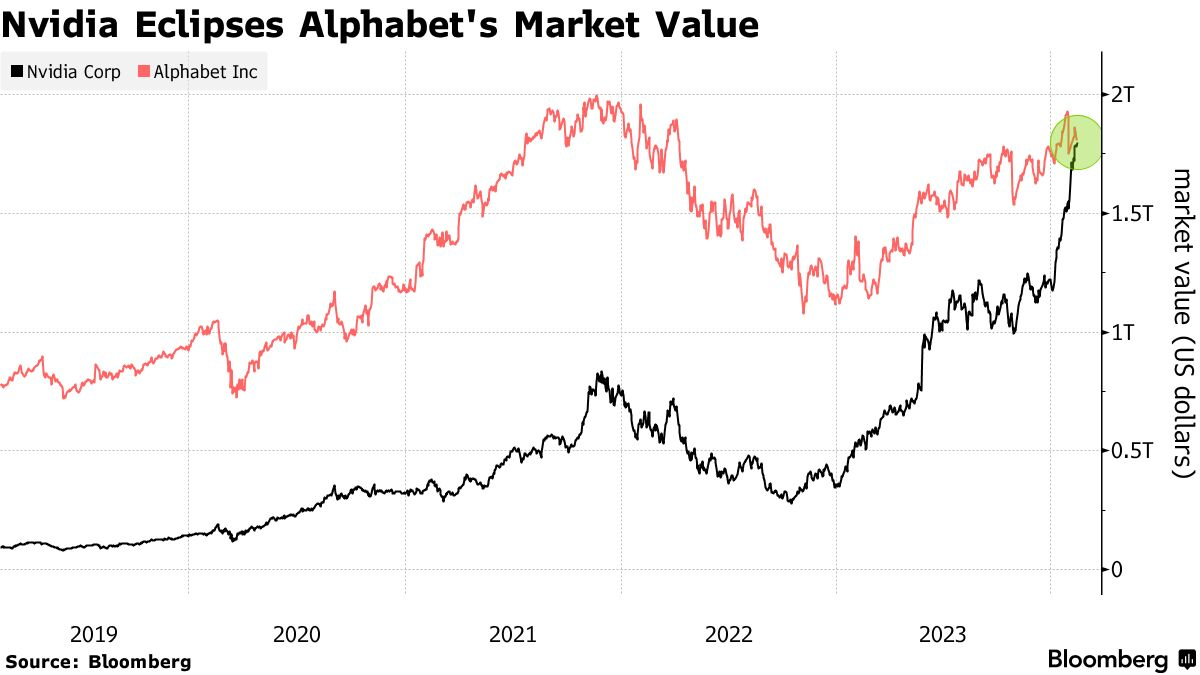
The driving force behind Nvidia's remarkable rally this year has been the insatiable demand for its accelerators, which power data centers running AI applications. This surge in demand has led to a staggering 49% increase in Nvidia's stock price and an addition of about $602 billion in market value. Despite other major tech companies performing well in 2024, Nvidia's rally has overshadowed them.
Analysts anticipate another robust earnings report from Nvidia, slated to be released on February 21st, as the company continues to witness strong demand for its AI products, particularly its AI H100 accelerators. Sales have been driven by significant AI spending at major customers such as Microsoft Corp. and Meta Platforms Inc. Nvidia's ability to demonstrate substantial revenue growth from AI sets it apart from its competitors.
The market's confidence in Nvidia is reflected in the recent surge in price targets by at least five brokerage firms this month. Analysts have significantly increased their 2024 revenue estimates for Nvidia, underscoring the optimistic outlook for the company's future performance.
Furthermore, Nvidia's dominance in the AI chip market is evident as it prepares to release the H200 chip, boasting superior memory capacity and bandwidth compared to its predecessor. The company's strategic investments, including a $30 billion allocation to a unit focused on assisting other companies in developing custom AI chips, position it for continued growth and innovation.
Nikkei hits multi decade high
The Nikkei Stock Average traded above 38,000, marking a significant milestone as it reached a 34-year high. This surge was largely fueled by gains in chip-related stocks and positive performances on U.S. stock markets. Notably, this is the first time since January 11, 1990, that the Tokyo benchmark index has surpassed the 38,000 mark at the close of trade.
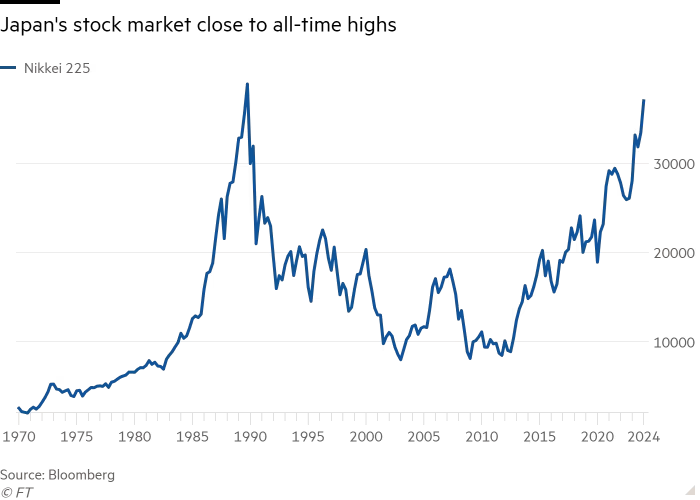
Investor optimism has been buoyed by stronger corporate governance and favorable earnings reports from major companies for the April to December period of 2023. Notable among these were the impressive performances of insurance giants Tokio Marine Holdings, Sompo Holdings, and MS&AD Insurance Group Holdings, all hitting new highs after announcing robust earnings.
Additionally, tech giant Rakuten Group saw a significant surge, with its shares soaring 16% following the announcement of narrowed losses for the 2023 fiscal year ended December. Chip-related stocks, including Tokyo Electron, Advantest, and Shin-Etsu Chemical, also contributed to the Nikkei's upward trajectory, with Tokyo Electron breaking its daily high.
Market watchers remain bullish on Japanese stocks, with expectations of continued strong corporate earnings and prospects for the current fiscal year. This optimism has propelled the Nikkei Average closer to hitting a new record high, reflecting the positive sentiment among investors. Amidst the ongoing AI chip arms race and generative AI-led growth, the Nikkei's upward momentum underscores the resilience and potential of the Japanese market.
US CPI warmer than expected
The latest Consumer Price Index (CPI) data for January has sent ripples through the financial markets, indicating a bumpier path towards disinflation than previously anticipated. According to the Bureau of Labor Statistics, consumer prices rose by 3.1% year-over-year in January, exceeding forecasts and marking a slight decrease from December's 3.4% surge. On a monthly basis, the index recorded a notable increase of 0.3%, the most significant monthly rise since September.
Of particular note is the core inflation rate, which remained largely unchanged at 3.9% annually. This metric, favored by the Federal Reserve, has consistently hovered above the central bank's target of 2%. Shelter inflation emerged as the primary driver of the overall increase in costs, with shelter costs rising by 0.6% in January, marking their highest monthly jump since September 2023. However, energy prices experienced a decline during the same period.
While rent prices showed signs of softening, consumers continue to grapple with high prices, particularly evident in expenditures at supermarkets and gas stations. Despite these inflationary pressures, the nation's economy maintains its strength, leading experts to suggest that an interest rate cut in the first half of the year is unlikely unless consumer prices exhibit a more pronounced downward trajectory.
Markets pare back Fed rate cut expectations
The probability of Federal Reserve rate cuts has been dialed back, with market expectations shifting from an earlier forecast of May to a more subdued projection for June. This adjustment follows hotter than expected U.S. inflation in January, which has prompted a recalibration of monetary policy timelines. Odds for a rate cut in May plummeted to about 32%, down from approximately 64% before the release of the inflation figures.
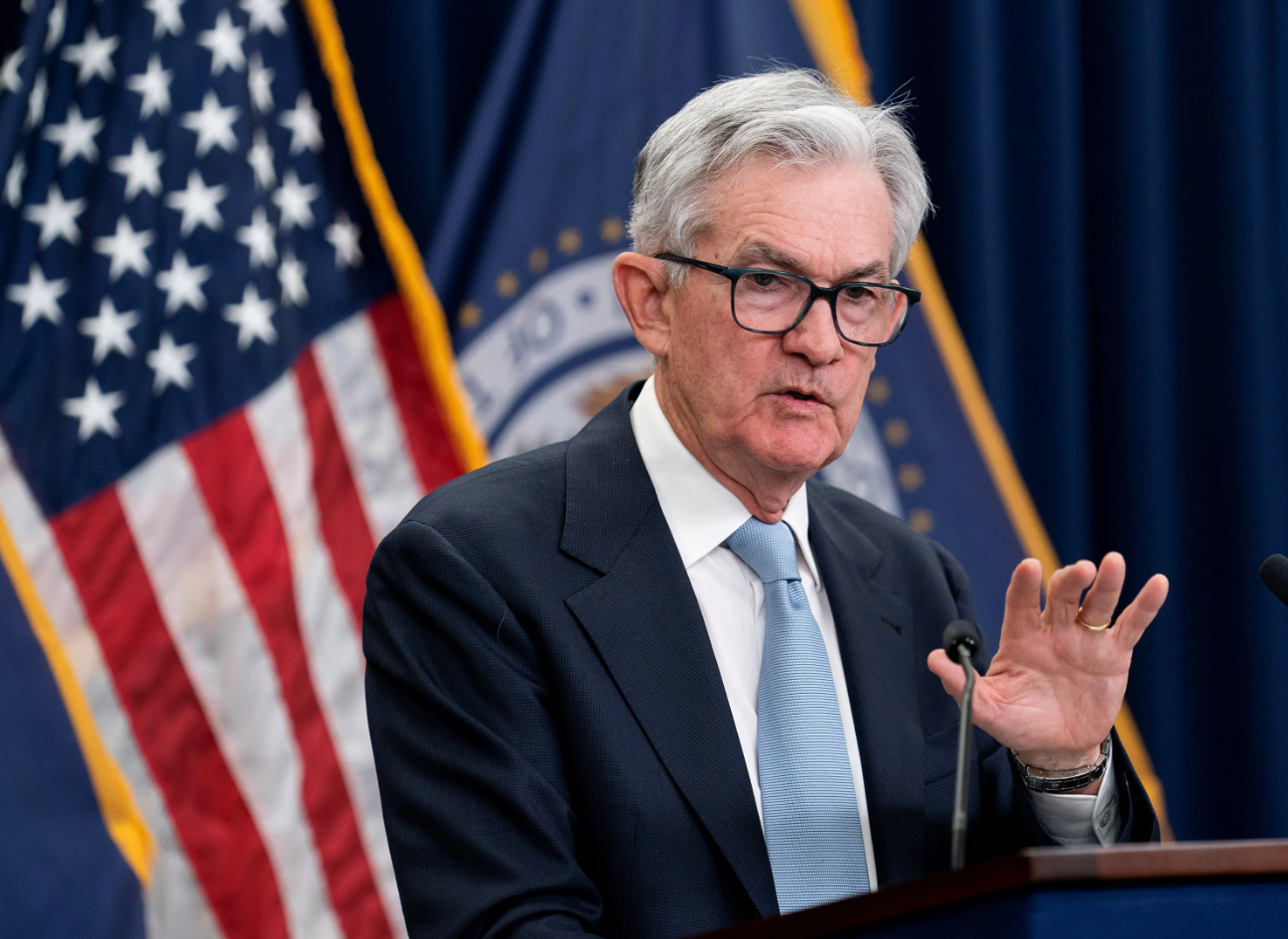
The Fed's cautious stance, reiterated by Fed Chair Jerome Powell and other officials, underscores the need for sustained positive inflation data before considering any policy easing. While there is acknowledgment of inflation moderating from its peak, the central bank remains vigilant and emphasizes the importance of observing longer-term trends.
The market's reaction to the inflation report was swift, with Treasury yields surging to their highest levels this year. This surge in yields reflects the evolving sentiment among investors and traders, who were previously banking on rate cuts to counterbalance losses incurred during the Fed's tightening cycle.
Despite the uncertainties surrounding the timing of rate cuts, some analysts maintain a broader perspective on the attractiveness of U.S. Treasuries for income and diversification purposes. They emphasize the relative stability of yields amidst evolving inflation dynamics, highlighting the appeal of fixed income securities in the current economic landscape.
US Retail Sales decline more than expected
In January, Retail Sales in the US experienced a steeper decline than anticipated, with a 0.8% drop reported by the US Census Bureau. This figure fell short of market expectations, which had forecasted a more modest decrease of 0.1%. Notably, Retail Sales excluding autos contracted by 0.6% during the same period. Despite this downturn, total sales for the November 2023 through January 2024 period were up 3.1% compared to the same period a year ago.
The decline in retail sales, the largest in nearly a year, was evident across various sectors, including building material stores and auto dealers. Some economists attributed this broad-based weakness to severe winter weather conditions experienced throughout the country in January.
However, while the January slowdown may indicate a near-term pullback in consumption, economists suggest that the robust labor market and easing inflation should mitigate any significant collapse in spending. Additionally, recent manufacturing surveys hint at an improvement in the sector, and homebuilder sentiment has risen to a six-month high, suggesting that the overall economy remains resilient.
Despite the decline in retail sales, which was reflected in a 0.4% drop in control-group sales, used to calculate gross domestic product, Treasury yields slid, and the S&P 500 index rose, while the dollar experienced a downturn. This suggests that while there may be short-term challenges in the retail sector, the broader economic outlook remains cautiously optimistic.
What's Ahead
Holidays: As Asian markets return from the Lunar New Year holidays last week, the US President’s Day holiday is on Monday 19th February, with US cash equity and bond markets closed and the equivalent futures markets observing partial closures.
Central Bank Watch: A relatively quiet week for central banks, but we do see the PBoC Interest Rate Decision Tuesday.
Macro Data Watch: The focus this week will be global manufacturing, services and Flash PMI data Wednesday. We will also see EU CPI release Wednesday.
Earnings Watch: Most of the US earnings calls for Q4 2023 have already occurred, but a few notable companies still remain. This week sees Walmart and Home Depot Tuesday and Nvidia, whose market cap has just surpassed that of Amazon and Alphabet, on Wednesday.
Date
Major Macro Data
02/19/2024
Nothing of note
02/20/2024
PBoC Interest Rate Decision
02/21/2024
EU Consumer Confidence
02/22/2024
Global Manufacturing, Services and Composite Flash PMI, EU CPI (MoM, YoY)
02/23/2024
UK Consumer Confidence; Germany GDP (QoQ, YoY)
.jpg)