
Week commencing February 12th 2024
TradeDay Macro Matters
Macroeconomic / Geopolitical developments
- Stocks advance again, S&P 500 breaks 5000
- Jerome Powell pushes back on early rate cuts in 60 Minutes interview
- US regional banks struggle with commercial real estate worries
- Record $42 billion 10-year note auction goes well
- What's Ahead
Stocks advance again, S&P 500 breaks 5000
Wall Street celebrated a significant milestone as the S&P 500 closed above 5,000 for the first time, indicating a strong upward trend in the market. The Nasdaq Composite also surged, nearing its all-time high, driven by robust performance from Big Tech stocks like Nvidia, Microsoft, and Amazon.
The MSCI World Index climbed 0.5%, reaching its highest-ever level, with the global benchmark of developed markets surpassing its previous peak in January 2022. The rally was fueled by optimism around cooling inflation, which raised expectations for company profits and supported stocks.
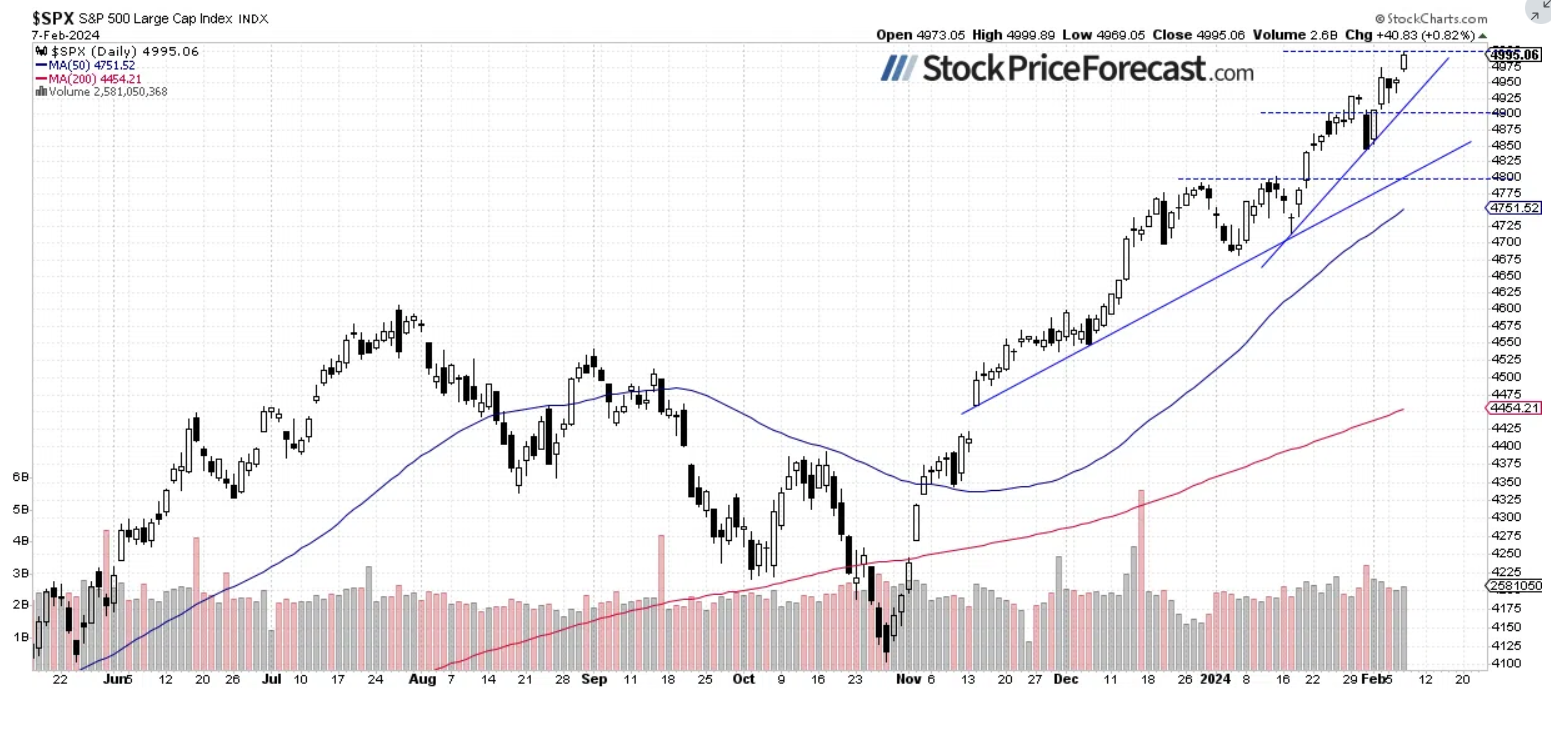
Specifically, Nvidia, a leading chipmaker, and Meta, the parent company of Facebook, have spearheaded the market's ascent, with each surging over 30% since the start of the year. The robust performance of these major firms has overshadowed investor worries regarding the Federal Reserve's pace of interest rate cuts anticipated for this year.
Despite some fluctuations, overall profits for S&P 500 companies have exceeded expectations, contributing to the market's positive sentiment. Additionally, while Treasury yields saw slight increases, the stock market remained resilient, indicating confidence even as expectations for interest rate cuts diminished. This optimistic outlook, however, is accompanied by caution, with some analysts warning of potential overvaluation and the need to remain vigilant against complacency in the midst of a strong bull run.
Jerome Powell pushes back on early rate cuts in 60 Minutes interview
In a recent interview with CBS's 60 Minutes, Federal Reserve Chair Jerome Powell reiterated the central bank's cautious approach to cutting interest rates too soon, suggesting that a rate reduction in March is unlikely. Powell emphasized the importance of gathering more economic data to ensure that inflation is on a sustainable path towards the Fed's target of 2%.
This comes after a 16-month period where the benchmark lending rate increased dramatically, rising from nearly zero to a range of 5.25% to 5.5%. This led to heightened borrowing costs for various purposes, including cars, homes, and credit cards. The rate hike campaign has achieved its goal of lowering inflation, from last year's peak of 7.1%. It has now eased to 2.6%, but remains above the Fed's 2% target. The labor market remains robust, with unemployment holding steady at 3.7% in January and the addition of 353,000 jobs.
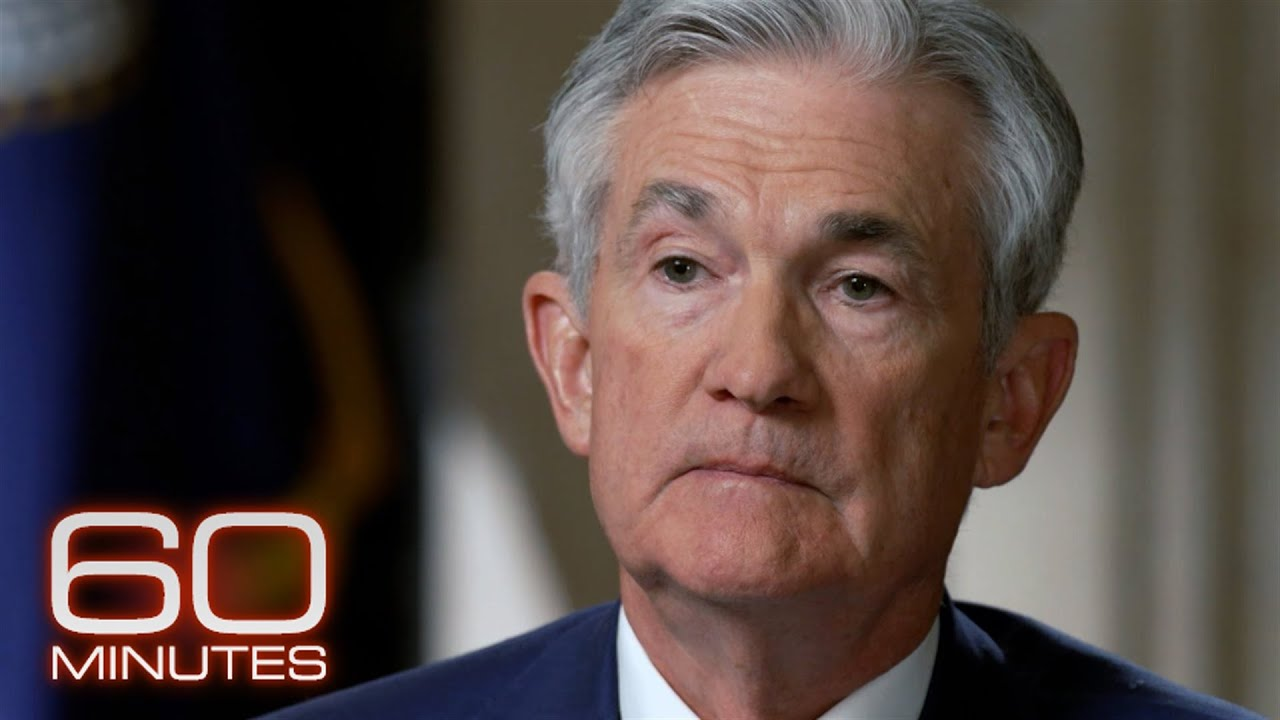
Powell expressed concerns about the risks associated with moving too quickly and highlighted the need to see continued evidence that inflationary pressures are subsiding. While Powell indicated that the Fed may consider rate cuts later in the year, he stressed that any decision would depend on the overall economic context and the trajectory of inflation. Powell's remarks underscored the Fed's commitment to data-driven decision-making and its reluctance to make preemptive moves based on short-term fluctuations.
Powell also addressed geopolitical concerns, noting conflicts in Ukraine and the Middle East. He expressed confidence in the US economy's resilience to disruptions from China but highlighted the unsustainable US fiscal trajectory. Powell also discussed risks in commercial real estate, particularly for smaller banks, and reiterated the Fed's commitment to assisting them through potential losses.
US regional banks struggle with commercial real estate worries
A new report prepared by the National Bureau of Economic Research highlights the increasing solvency risks faced by many small regional banks in the United States due to falling commercial property values. About 14% of all commercial real estate loans, particularly those on office buildings, are now in negative equity, posing a risk of default as borrowers' stakes are surpassed by their debt.
This distress could potentially impact dozens to over 300 smaller regional banks. The total commercial real estate debt held by US banks stands at approximately $2.7 trillion, with values having declined by 22% since the first quarter of 2022. The Federal Reserve's interest rate hikes have contributed to this downturn, with office prices plummeting by 35% amid reduced demand for workspace due to remote work adoption.

Concerns over bank stability have escalated following recent failures and distressed sales, including that of Silicon Valley Bank, Signature Bank, and First Republic Bank. If the default rate on commercial real estate climbs to 10% or 20%, it could result in significant additional bank losses, estimated at $80 billion and $160 billion respectively.
Despite rising delinquency rates, officials have downplayed the risk of a broader crisis, though investor fears persist, as indicated by the declining stock prices of regional banks. Additionally, a funding lifeline provided by the Fed's Bank Term Funding Program, set to expire in March, adds to uncertainties surrounding distressed lenders' ability to shore up their finances.
Record $42 billion 10-year note auction goes well
The US Treasury conducted its largest-ever 10-year note auction, selling $42 billion of notes at a yield of 4.093%, slightly lower than anticipated, signaling robust demand from investors. The auction's success eased concerns following recent market volatility and reinforced confidence in the Federal Reserve's eventual interest rate cuts.
Despite challenges posed by uncertain monetary policy outlooks and growing bond market sizes, demand for the 10-year sale remained strong, with international demand particularly notable. The auction result, which broke a streak of weaker sales in previous months, indicates investors' continued interest in longer-term Treasuries, with yields around 4% considered historically attractive.
The auction's solid bid-to-cover ratio and strong international demand underscore the market's confidence in US government debt despite ongoing economic crosscurrents.
What's Ahead
Other Events: Chinese New Year is this week, so mainland Chinese markets and other Asian markets will be closed, so Asian sessions could be particularly quiet.
Central Bank Watch: A quiet week for central banks, Fed speakers always in focus.
Macro Data Watch: A busy week, with employment data Tuesday for the UK and Wednesday for the EU. The standout is the US CPI data Tuesday and then UK CPI Wednesday, along with PPI data Wednesday for the UK and Friday for the US. We also see Retail Sales for the US Thursday and for the UK on Friday
Date
Major Macro Data
02/12/2024
Nothing of note
02/13/2024
UK Employment; EU and German ZEW Surveys; US CPI (MoM, YoY)
02/14/2024
UK inflation report including CPI (MoM, YoY); EU GDP (QoQ, YoY), Employment and Industrial Production
02/15/2024
Japan GDP (QoQ, YoY); Australian Employment; UK GDP (MoM, QoQ, YoY), Industrial Production and Manufacturing Production; US Retail Sales (MoM); US Industrial Production (MoM)
02/16/2024
UK Retail Sales (MoM, YoY); US PPI (MoM, YoY); Michigan Consumer Sentiment
.jpg)